
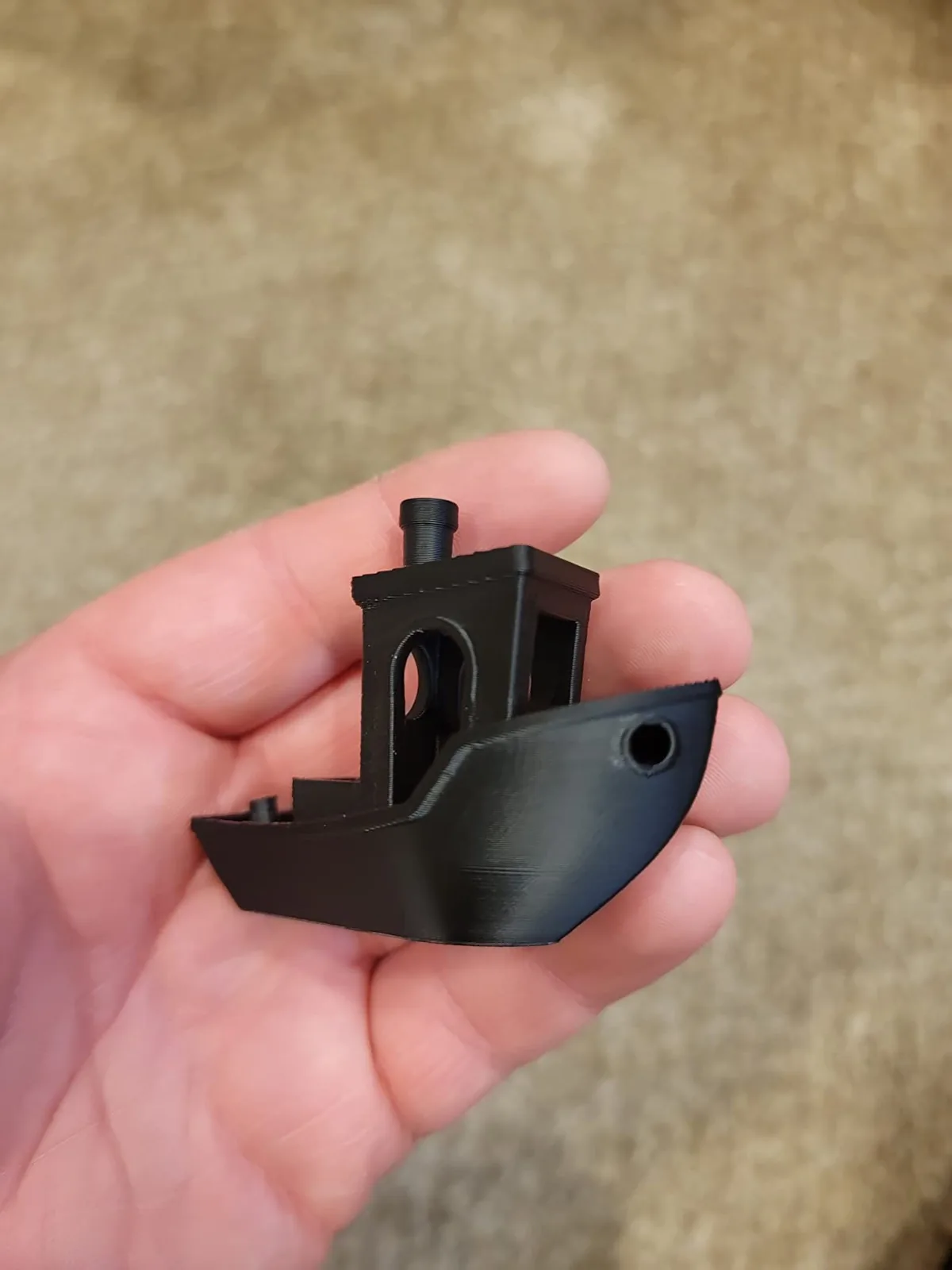
In any workshop, PLA and ABS are the foundational FDM materials. PLA is the easy-to-print default, perfect for quick prototypes and decorative objects. ABS is the old-school engineering workhorse, demanding but tough. Choosing between them isn’t about which is “better”. It’s about understanding the deep technical trade-offs and picking the right material for the job.
This guide breaks down the real-world performance of these two filaments, focusing on the three critical factors for functional parts: mechanical strength, heat deflection, and the absolute necessity of an enclosure for printing ABS.
Material Properties: A Head-to-Head Breakdown
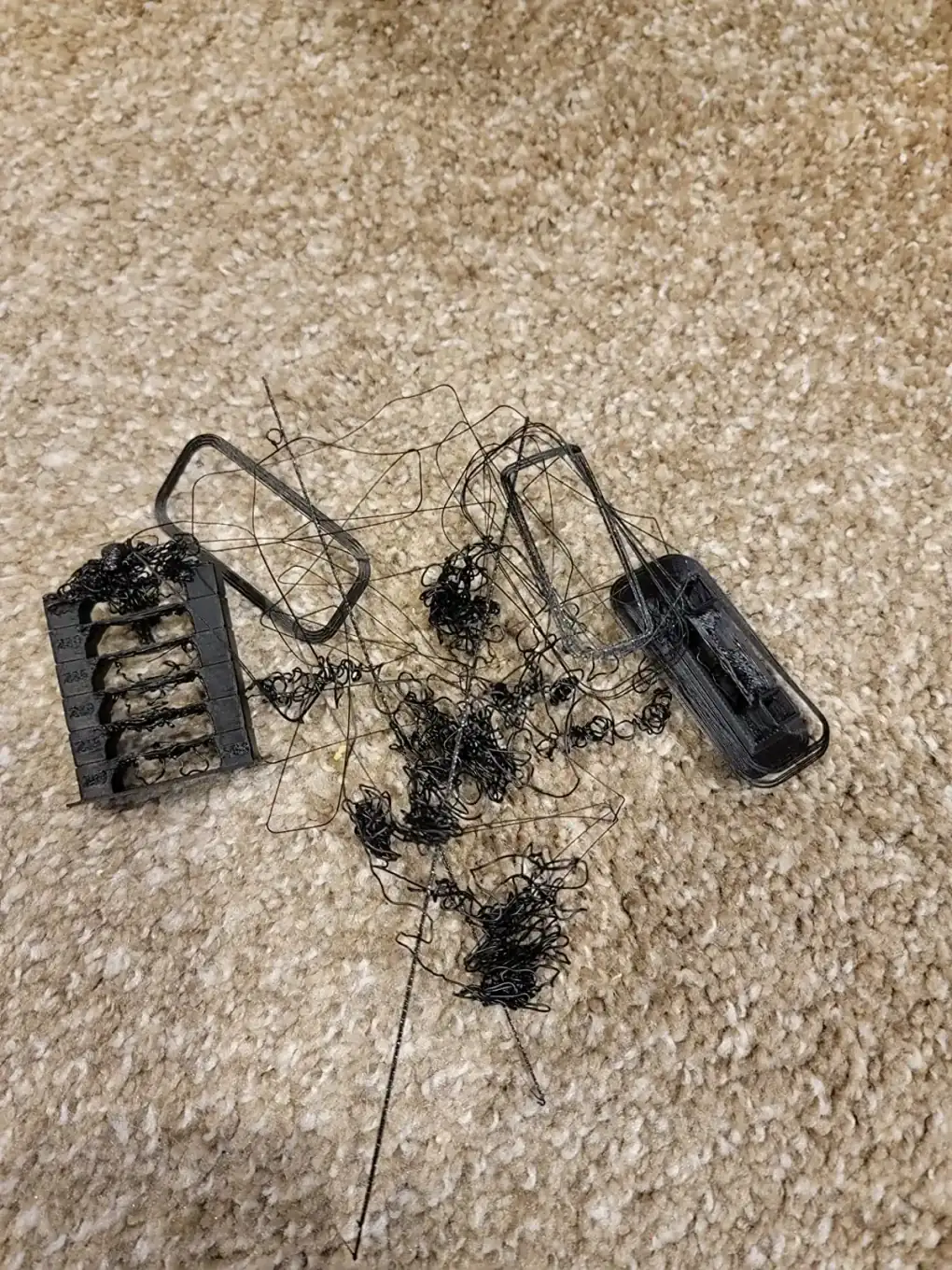
The mechanical properties of PLA and ABS differ significantly, dictating how printed parts will behave and fail under physical stress.
Tensile Strength and Stiffness
PLA generally has higher tensile strength and stiffness than ABS, making it more resistant to static pulling forces but more brittle.
- PLA: is very rigid. It will resist bending up to its failure point, then it will snap suddenly and cleanly. This is a brittle failure mode. It has high ultimate tensile strength but low elongation at break. Think of it like glass.
- ABS: is more ductile and less stiff. When you apply a load, it will bend and deform significantly before it finally fails. This is a ductile failure mode. It gives you a visual warning before a catastrophic break. Think of it like hard rubber.
A PLA hook might hold 10kg without moving, then snap at 11kg. An ABS hook might start to stretch and deform at 8kg, giving you plenty of warning before it lets go. For a static shelf bracket, PLA’s stiffness might be an advantage. For anything that needs to flex, ABS is the clear choice.
Impact Resistance and Toughness
ABS has superior impact resistance and toughness compared to PLA, allowing it to absorb energy and impact without fracturing.
- PLA: is brittle. Drop a PLA part with thin walls onto a concrete floor, and it is likely to shatter, especially along the layer lines where adhesion is weakest.
- ABS: has excellent impact resistance. This is why LEGO bricks are made from ABS. You can drop, hit, and stress an ABS part, and it will absorb the energy.
If you are printing a drone frame, a protective case for electronics, or a component for a remote control car, you need the impact absorption of ABS. PLA would simply crack on the first hard landing or drop.
Heat Deflection Temperature (HDT)
The Heat Deflection Temperature (HDT), which is the point where a material begins to soften and deform under a load, is significantly higher for ABS than for PLA.
- PLA’s HDT is a dismal ~55°C (131°F). Its glass transition temperature (Tg), where the polymer chains start to move, is around 60°C. Leave a PLA print in a car on a sunny day, and you will come back to a warped, useless piece of plastic. It is unsuitable for anything that will see even moderate heat.
- ABS’s HDT is a respectable ~100°C (212°F). Its Tg is around 105°C. ABS parts can function inside machine enclosures, in car interiors, and in direct sunlight without losing their structural integrity.
This single property makes ABS the mandatory choice for functional parts in any thermally demanding environment.
Printing Requirements: The Real-World Workflow
The material properties of PLA and ABS dictate their printing processes, with PLA being more forgiving and ABS demanding strict environmental control.
The following table compares the typical printing parameters for PLA and ABS:
| Parameter | PLA (Polylactic Acid) | ABS (Acrylonitrile Butadiene Styrene) |
|---|---|---|
| Nozzle Temp | 190 - 220°C | 230 - 260°C |
| Bed Temp | 50 - 60°C | 90 - 110°C |
| Bed Surface | PEI, Glass + Glue, Masking Tape | PEI, Kapton Tape, ABS Slurry |
| Part Cooling Fan | 100% | 0 - 20% (Low to None) |
| Enclosure | Not Required (Can cause clogs) | Absolutely Mandatory |
| Warping | Low | Very High (without an enclosure) |
| Fumes / VOCs | Low (Sweet Odor) | High (Styrene, requires ventilation) |
The Necessity of an Enclosure for ABS
Printing ABS reliably on an open-frame printer is highly prone to failure due to the material’s thermal contraction characteristics.
The reason is thermal contraction. ABS shrinks significantly as it cools. When you print without an enclosure, ambient air and drafts cool the upper layers of your part rapidly while the lower layers are kept hot by the 110°C bed. This temperature difference creates immense internal stress, causing the corners of the print to lift off the bed (warping) and the layers to split apart (delamination).
An enclosure solves this. It traps heat from the print bed, creating a stable, heated chamber of around 40-50°C. This drastically slows the cooling rate of the entire part, relieving the internal stresses and preventing both warping and cracking. You must also turn your part cooling fan off or to a very low setting (under 20%). The goal is to keep the entire part hot and let it cool down slowly as one solid piece after the print is finished.
For a deeper dive into printer setup, check our guide on calibrating your machine for success.
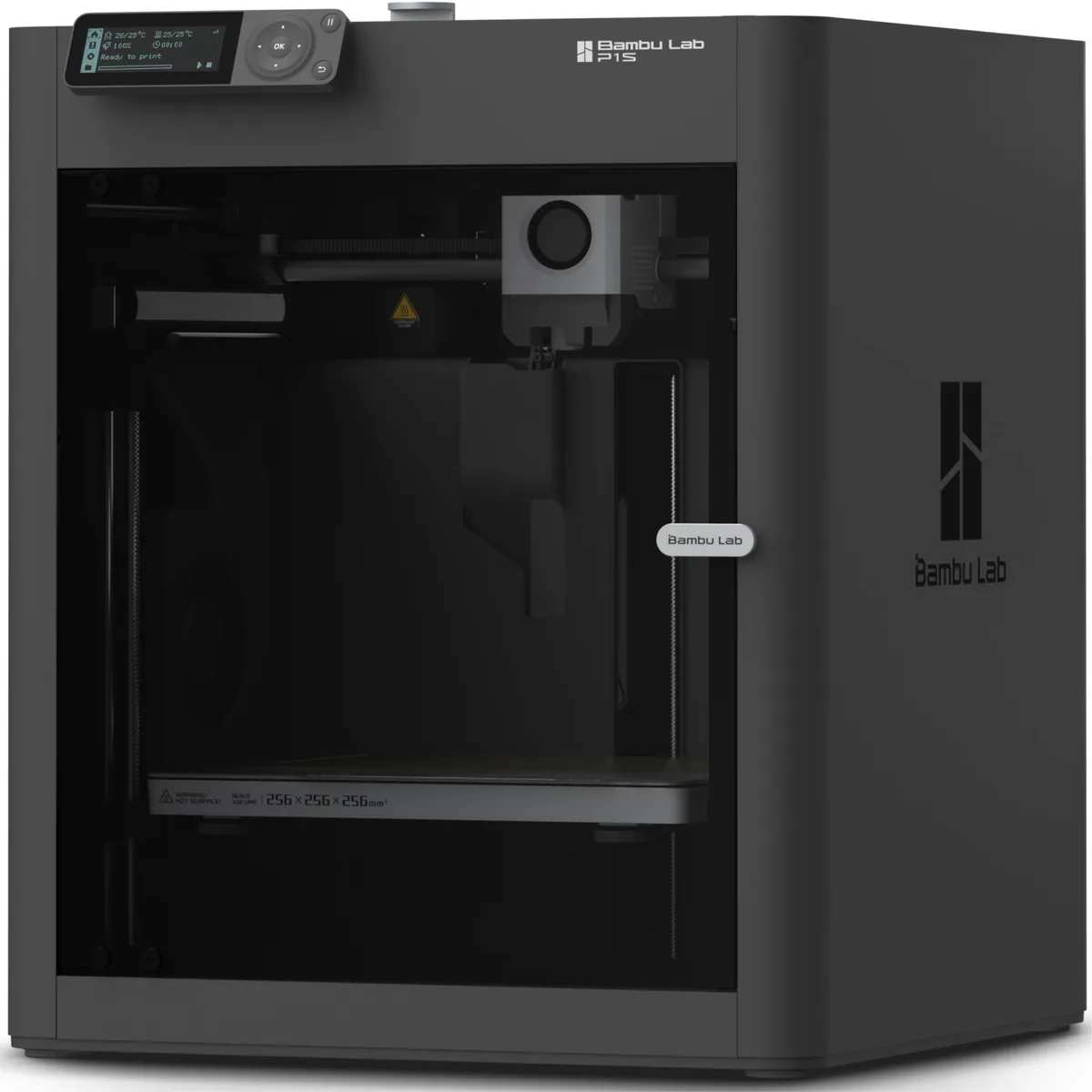
Bambu Lab P1S Enclosed 3D Printer
Pros
- Fully enclosed CoreXY chassis with auxiliary cooling fan, Seamless multi-color / multi-material integration with Bambu AMS, Reliable out-of-the-box first layers with dual automated bed leveling, Active vibration compensation and belt tension monitoring
- High-speed CoreXY system for fast, quality prints
- Integrated air filtration and chamber fan
Cons
- Proprietary closed ecosystem
- Chamber is passively heated by the bed rather than a dedicated PTC heater
- Upgrading to hardened nozzle for carbon fiber requires separate swap
The Bambu Lab P1S is a perfect example of a modern machine built for engineering materials. It comes fully enclosed with a chamber temperature regulator and an activated carbon filter. This hardware removes all the guesswork from printing ABS, delivering consistent, reliable results that are nearly impossible to achieve on an open-frame bedslinger. It is one of the best FDM 3D printers available for this purpose.
Filament Dryness and Moisture Control
Both PLA and ABS absorb moisture from the air, which can cause print failure when water boils into steam in the hotend, resulting in:
- Popping and sizzling sounds from the nozzle
- Extreme stringing and oozing
- Weak layer adhesion, resulting in brittle parts
- A rough, ugly surface finish
ABS is less prone to moisture absorption than PLA or PETG, but wet ABS still prints terribly. Storing your spools in a sealed bag with desiccant is a minimum requirement. For best results, use a dedicated filament dryer.
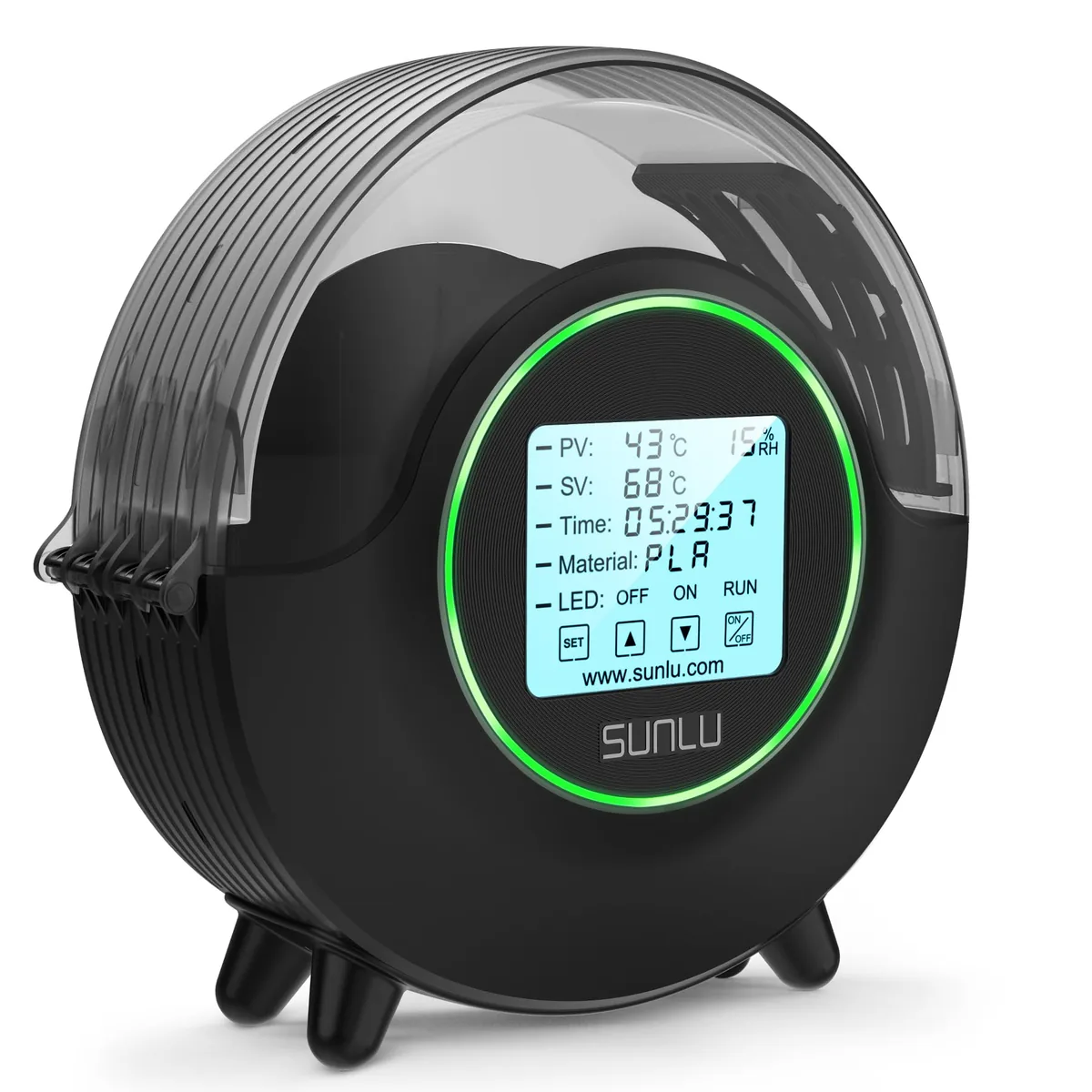
SUNLU S2 Upgraded Filament Dryer (with Fan)
Pros
- 70°C maximum temperature ceiling safely dehydrates Nylon (PA), PC, and TPU, Upgraded internal circulation fan prevents localized scorching, 4.6” circular touchscreen display with ambient LED status ring, Very quiet operation (~40 dB) suitable for bedroom or office workstations
- Simple to operate with a clear digital display
- Improves print quality for virtually all filament types
Cons
- Humidity sensor measures air pocket near the bottom rather than spool core
- Moisture vapor venting requires cracking the top seal during the first hour of drying
A filament dryer like the SUNLU S2 is not a luxury. It is a fundamental piece of workshop equipment. It gently heats the spool to bake out moisture, restoring the filament to a pristine, dry state. Running a spool through a dryer for 4-6 hours before a long print is the best way to prevent moisture-related failures.
Choosing Between PLA and ABS
The choice between PLA and ABS depends on the functional requirements of the printed part.
Use PLA if:
- The part is a visual prototype, desktop model, or cosplay piece.
- The part will be used indoors and away from any heat source.
- The part does not need to withstand high impact or repeated flexing.
- You have an open-frame printer and need an easy, reliable printing experience.
Use ABS if:
- The part requires heat resistance above 50°C (e.g., inside a car, near a motor).
- The part needs to be tough and absorb impacts (e.g., a drone frame, tool holder).
- You need to post-process the part for a smooth surface (ABS can be smoothed with acetone vapor).
- You have a fully enclosed printer and proper ventilation to handle VOC fumes.
Choosing the right material is the first step toward a successful functional print. Understand these core differences, and you will save yourself hours of frustration and wasted plastic. For more material deep dives, explore our full 3D printing material guides category.
Related Filament and Resin Comparisons
Best Filament Dryers
Wet filament ruins the performance and aesthetics of even the strongest materials. Choosing from the best 3D printer filament dryers eliminates moisture-related defects before slicing begins.
PLA vs PETG vs ABS
For a comprehensive overview of the most common filament choices, reading PLA vs PETG vs ABS: The Ultimate 3D Printing Filament Guide provides the baseline specifications needed for any workshop project.