
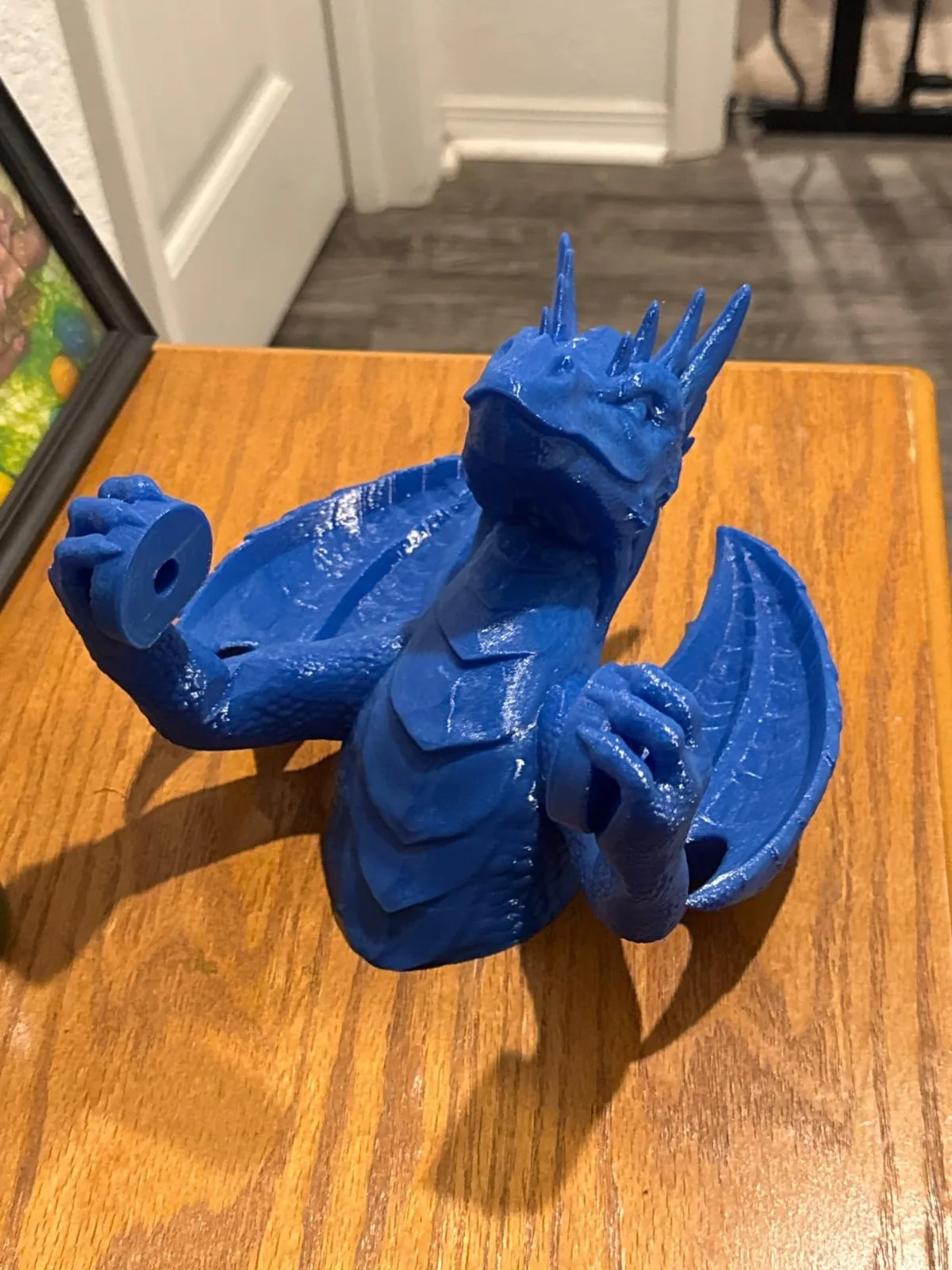
PLA is best for easy printing and aesthetics, PETG offers a balance of strength and flexibility for functional parts, and ABS provides high heat resistance and durability for engineering applications. These three polymers behave fundamentally differently when melted through an extruder nozzle.
Below, we break down their thermal characteristics, mechanical strengths, product recommendations, and slicer calibration guidelines. Exploring other 3D printing material guides ensures your comparative suitability analysis covers all relevant options.
Comparison Matrix
The following matrix summarizes the key differences between PLA, PETG, and ABS:
| Property | PLA (Polylactic Acid) | PETG (Polyethylene Terephthalate Glycol) | ABS (Acrylonitrile Butadiene Styrene) |
|---|---|---|---|
| Ease of Printing | ⭐⭐⭐⭐⭐ (Easiest) | ⭐⭐⭐⭐☆ (Moderate) | ⭐⭐☆☆☆ (Demanding) |
| Extruder Temp | 200°C – 220°C | 230°C – 250°C | 240°C – 260°C |
| Bed Temp | 50°C – 60°C | 70°C – 85°C | 90°C – 110°C |
| Enclosure Needed? | No | No (Draft-free preferred) | Mandatory |
| Heat Deflection | ~55°C (Softens in sun/cars) | ~75°C (Good thermal resistance) | ~100°C (High heat resistance) |
| Impact & Toughness | Low–Medium (Brittle under shock) | High (Ductile, flexes before snapping) | Very High (Withstands impact) |
| UV & Weathering | Poor (Degrades outdoors) | Excellent (Weatherproof) | Moderate (Prone to UV yellowing; use ASA) |
| Post-Processing | Sanding, Primer, Paint | Difficult to sand | Acetone vapor smoothing, sandable |
| Odor / Fumes | Sweet, organic, non-toxic | Low odor, minimal VOCs | Pungent styrene fumes (Needs HEPA/Carbon) |
1. PLA (Polylactic Acid): The Most Accessible Filament
PLA is the most accessible filament for 3D printing, offering a low melting point, near-zero shrinkage rate, and odorless extrusion, making it ideal for hobbyists and rapid prototyping studios.
Modern formulations like PLA+ (PLA Plus) add impact modifiers and elastomers that address traditional PLA’s main drawback: brittleness. PLA+ offers noticeably higher tensile strength and bend tolerance while preserving the effortless printability of basic PLA.
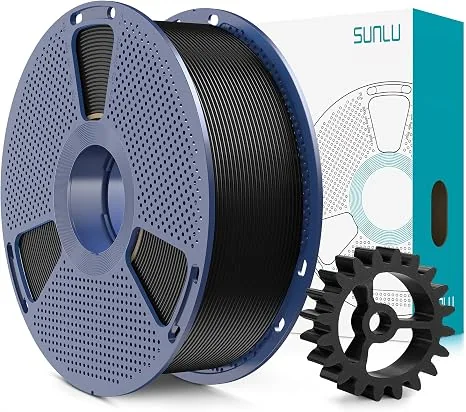
SUNLU PLA+ 2.0 3D Printer Filament 1.75mm
Pros
- Odorless plant-based resin
- upgraded toughness eliminates brittleness
- zero warping on open beds
- razor-sharp overhang detail
Cons
- Low heat deflection point (~55°C)
- will warp inside a parked automobile on hot summer afternoons
Calibration Tips for PLA
- Part Cooling Fan: Run cooling fans at 100% after layer 2. Aggressive airflow instantly solidifies extruded plastic, giving crisp bridges and clean 60° overhangs.
- Bed Adhesion: A clean textured PEI plate heated to 55°C–60°C requires zero glue sticks or painters tape. Wipe down the surface with 99% Isopropyl Alcohol (IPA) every 3 prints.
2. PETG: The Filament for Functional Utility
PETG is the ideal filament for functional utility, offering the ease of PLA combined with the ability to survive outdoors, resist water immersion, and withstand physical drops. Chemically related to plastic water bottles with added glycol to prevent crystallization, PETG combines thermal resistance up to 75°C with exceptional layer-to-layer weld strength.
Unlike PLA which snaps cleanly under sudden shock loads, PETG yields and flexes elastically. This makes it the premier material for drone frames, tool holders, greenhouse clips, and functional mechanical brackets.
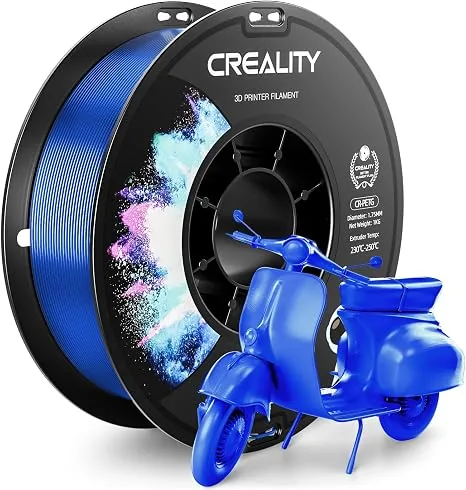
CREALITY CR-PETG 3D Printer Filament 1.75mm
Pros
- High mechanical impact strength
- UV and chemical resistant
- excellent layer weld adhesion
- waterproof utility
Cons
- Prone to fine stringing if moisture-saturated
- bonds excessively to smooth PEI or glass (requires release agent)
Calibration Tips for PETG
- Beware the “PETG Glass Fusion”: PETG adheres so strongly to bare smooth glass or smooth PEI that it will permanently tear off chunks of your build sheet upon cooling. Always use a textured powder-coated PEI sheet or apply a light layer of washable glue stick as a release barrier.
- Cooling Fan Management: Keep cooling fans between 20% and 40%. Excessive cooling fan speed prevents layers from chemically welding together, sacrificing PETG’s strength.
3. ABS: Industrial Toughness and Chemical Vapor Smoothing
ABS provides industrial toughness and chemical vapor smoothing, performing best in environments where parts must survive temperatures approaching 100°C, such as engine compartments, electronics enclosures, hotend mounts, and mechanical gearboxes.
ABS’s signature superpower is its reaction to acetone. By placing an ABS print in an acetone vapor chamber, layer lines melt together smoothly, yielding a mirror-gloss, injection-molded surface finish that is completely watertight.
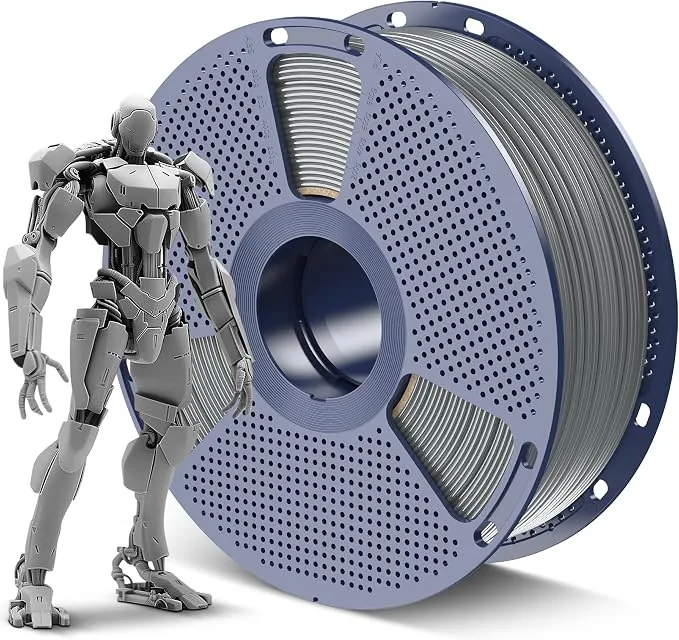
SUNLU ABS 3D Printer Filament 1.75mm
Pros
- High heat deflection (~100°C)
- vapor-smoothable with acetone
- easy to sand and drill
- rigid structural integrity
Cons
- Releases toxic styrene micro-particles and fumes (requires ventilation)
- severe warping and corner lift if printed without an enclosed chamber
Calibration Tips for ABS
- Enclosure is Non-Negotiable: ABS has a high thermal contraction coefficient (~0.8%). When cooler ambient room air touches the upper layers while lower layers sit on a 100°C bed, internal stress cracks the print. Keep printer doors shut and preheat your chamber to 45°C+ before pressing start.
- Safety First: Never print ABS in an unventilated bedroom or living space. Use active carbon filtration or vent printer exhaust through an open window.
4. Slicer Calibration Guidelines
To get started right away in Cura, PrusaSlicer, or OrcaSlicer, use the following baseline configurations:
| Slicer Parameter | PLA / PLA+ | PETG | ABS |
|---|---|---|---|
| Initial Layer Temp | 215°C | 240°C | 250°C |
| Standard Print Temp | 205°C – 210°C | 235°C – 245°C | 245°C – 255°C |
| Heated Bed Temp | 55°C – 60°C | 75°C – 85°C | 95°C – 105°C |
| Part Cooling Fan | 100% (Layers 3+) | 20% – 40% (Layer 4+) | 0% – 15% (Never full blast) |
| First Layer Print Speed | 25 mm/s | 20 mm/s | 20 mm/s |
| Outer Wall Print Speed | 60 – 150 mm/s | 50 – 100 mm/s | 40 – 80 mm/s |
| Direct Drive Retraction | 0.6mm – 0.8mm | 0.8mm – 1.2mm | 0.6mm – 0.8mm |
| Bowden Tube Retraction | 4.0mm – 5.5mm | 4.5mm – 6.0mm | 3.5mm – 5.0mm |
| Build Surface Plate | Textured / Smooth PEI | Textured PEI with glue | Textured PEI + ABS juice / brim |
Choosing the Right Filament for Your Needs
The right filament depends on your project’s mechanical requirements and your printer’s capabilities.
- Choose PLA if you want zero-hassle printing, crisp colors, cosmetic figurines, decorative desk toys, or if you do not own an enclosed printer.
- Choose PETG if you are engineering real-world items that will live outdoors, hold water, experience direct sunlight, or require impact-resistant durability without toxic odors.
- Choose ABS if you have an enclosed 3D printer and need parts to survive intense mechanical friction, motor heat, automotive engine bays, or if you want mirror-smooth acetone vapor finishes.
Related Filament and Resin Comparisons
Best Filament Dryers
Wet filament ruins the performance and aesthetics of even the strongest materials. Choosing from the best 3D printer filament dryers eliminates moisture-related defects before slicing begins.
PETG vs PLA
Choosing the right material depends heavily on mechanical and thermal requirements. When deciding between PETG vs PLA: The Engineer’s Guide to Functional Parts, evaluate whether the part needs impact resistance or stiffness.