
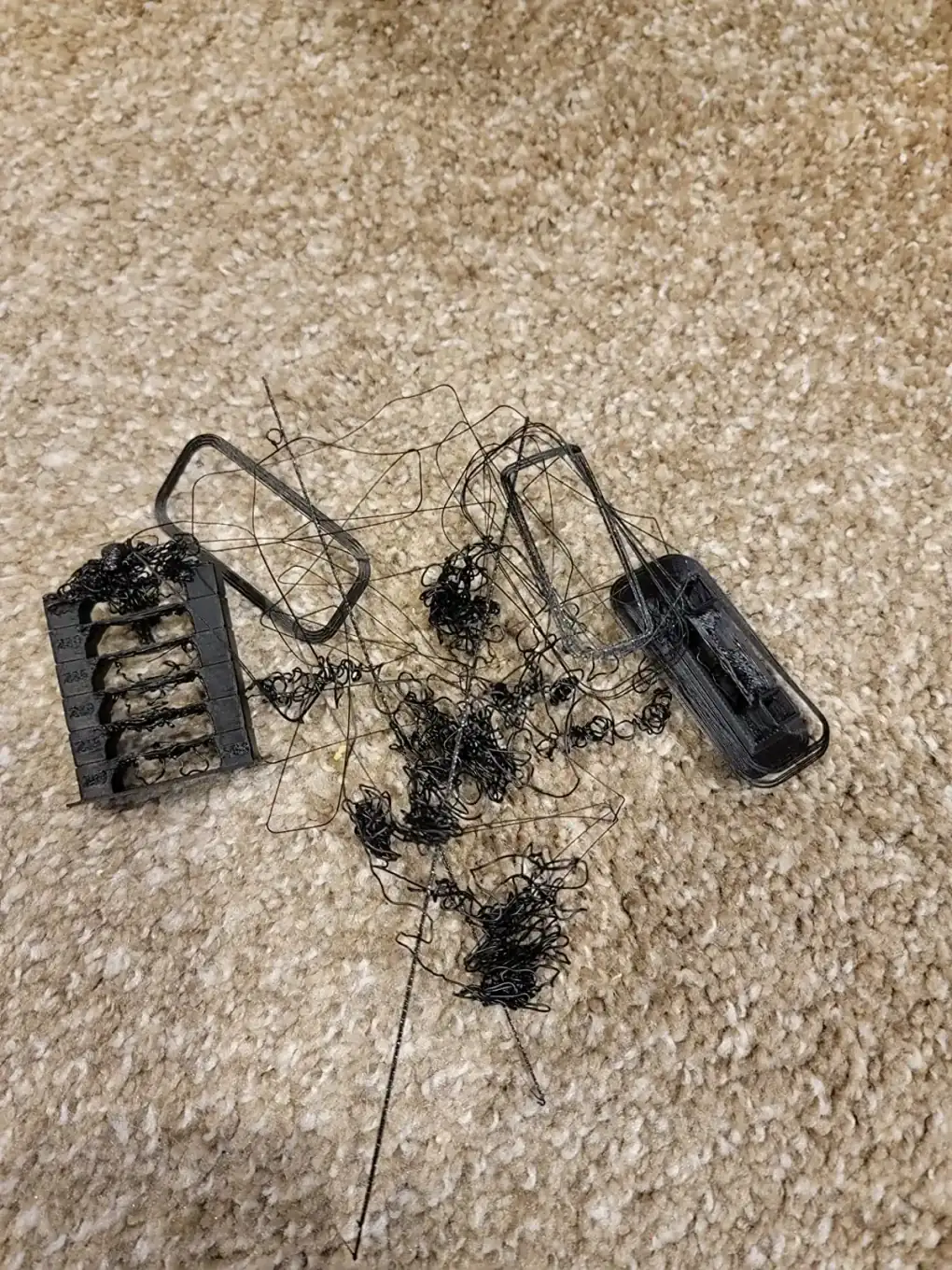
Active chamber heating controls ABS cooling more consistently than a passive enclosure because it regulates chamber air to a set temperature instead of relying on waste heat from the bed and hotend. A passive enclosure can still reduce drafts and warping on smaller parts. The sections below explain thermal contraction, establish a fair specification-based comparison, examine passive and active systems, compare their operating characteristics, and match each system to suitable work.
The two enclosure types differ in control, not merely in the presence of panels. A passive enclosure traps existing heat, so its chamber temperature changes with the room, bed setting, print duration, and ventilation. An active system adds a dedicated heater, temperature sensor, and control loop. That architecture reduces variation, but it does not replace correct filament drying, bed adhesion, part orientation, or slicer settings.
The Physics of Failure: Thermal Contraction
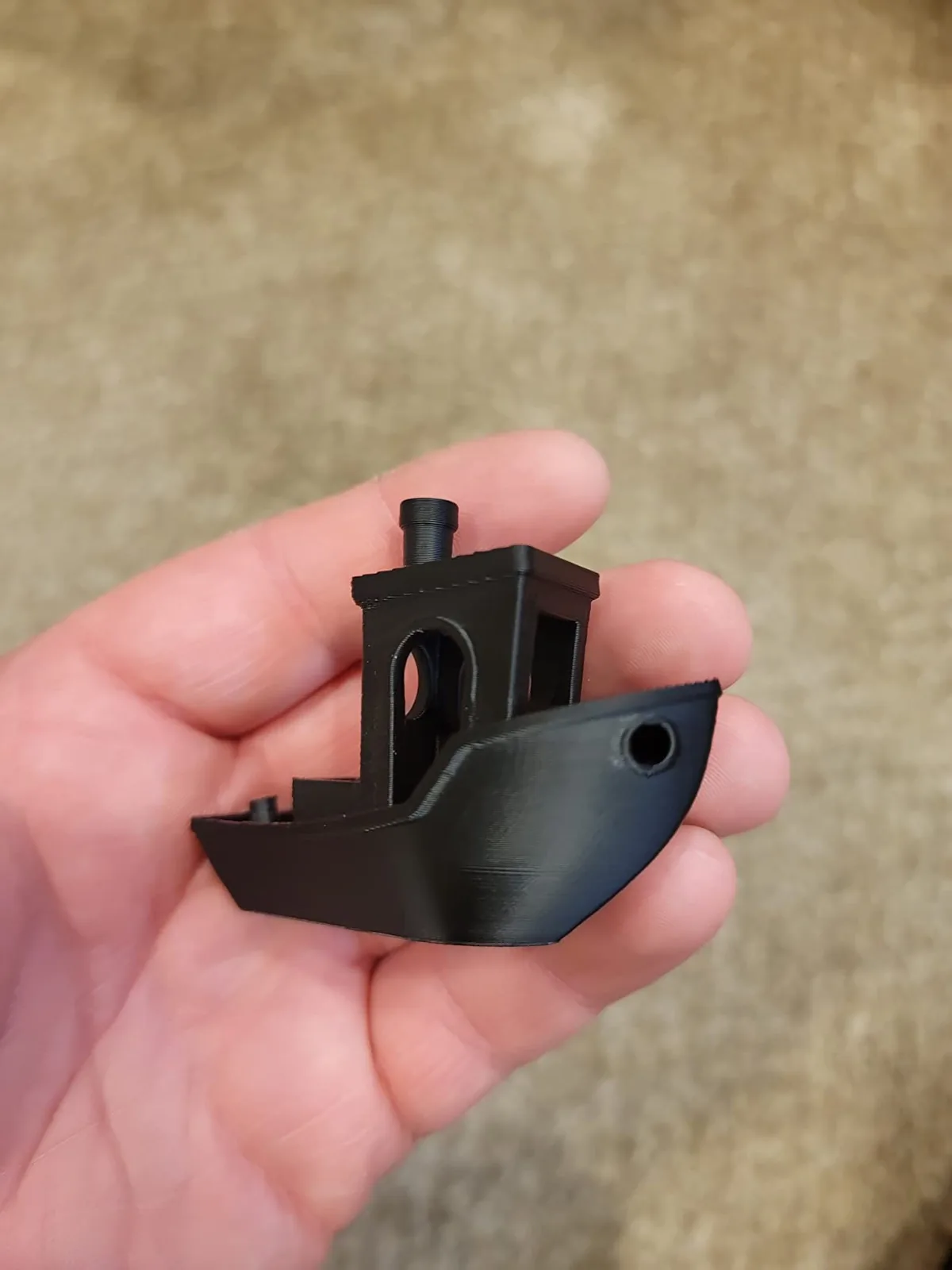
ABS warps and splits when different regions of a part cool and contract at different rates. Acrylonitrile Butadiene Styrene has a comparatively high coefficient of thermal expansion, so the material contracts as it cools from the filament maker’s listed extrusion range toward room temperature.
Uneven contraction produces two common problems:
- Warping: The bottom layers cool and shrink, pulling the corners of the print up off the build plate.
- Layer Splitting: A new, hot layer is laid down on a cooler, already-shrunk layer. The stress builds up between them until the weaker bond along the layer line cracks.
An enclosure slows cooling and reduces the temperature difference between newly extruded plastic and the existing model. Lower thermal gradients reduce internal stress. The appropriate chamber temperature depends on the ABS grade, part height, wall thickness, room temperature, and printer’s rated operating limits. Further context on material behavior can be found in ABS vs ASA for Enclosed 3D Printing: Heat and Weather.
Comparison Basis: Specifications and Controlled Variables
A useful active-versus-passive comparison starts with manufacturer specifications and holds the material, geometry, slicer profile, and room conditions constant.
The Printers:
- Passive Enclosure: The Bambu Lab P1S is fully enclosed but has no dedicated chamber heater. Bed and hotend heat raise the chamber temperature, and the resulting temperature is not a regulated setpoint.
- Active Chamber Heater: The QIDI Q1 Pro includes a dedicated PTC chamber heater that QIDI rates up to 60°C. Firmware controls the heater against a chamber sensor.
The Filament and Preparation: A controlled comparison uses one dry spool from the same production lot for both machines. The SUNLU S2 Filament Dryer (ASIN: B09PNDD5TT) is manufacturer-rated to 70°C, but the drying temperature and duration must follow the filament maker’s instructions. Keeping moisture condition constant prevents wet filament from being confused with a chamber-heating effect.
The Slicer and Settings: A comparison should use the same layer height, nozzle temperature, bed temperature, wall count, infill, and cooling rules wherever the two machines permit it. A representative control set might use a 0.2 mm layer height, a 260°C nozzle, a 100°C bed, and 25% gyroid infill, but the filament maker’s profile takes priority over those example values.
The Diagnostic Part: A 150 mm tall, 25 x 25 mm hollow square tower with 2.4 mm walls provides a repeatable geometry for checking corner lift and layer splitting. A tall, thin-walled shape is more sensitive to chamber gradients than a short, solid cube, so it can reveal differences without implying a universal strength result.
!A tall, simple 3D printed diagnostic model designed to reveal warping and layer splitting.
Passive Enclosure Example: Bambu Lab P1S
A passive enclosure reduces drafts and retains heat, but the Bambu Lab P1S does not provide a regulated chamber-temperature setpoint. Chamber air temperature therefore depends on bed temperature, room temperature, heat-soak time, print duration, exhaust behavior, and the surface area of the part.
That architecture can work for ABS prototypes and smaller functional parts when the room is stable. It cannot promise the same chamber condition on every job. Opening the door, increasing exhaust flow, or placing the printer in a cold garage can change the heat balance even when the slicer profile stays identical.
Documented diagnostic signs:
- Warping: Corner lift shows that contraction at the base exceeded the bed-adhesion force. The amount is specific to the part, surface, adhesive, and thermal conditions.
- Layer Adhesion: Fine horizontal cracks near the upper portion of a tall model indicate that higher layers cooled too quickly relative to the lower layers.
- Failure Mode: A clean break along a layer line indicates delamination. It does not by itself quantify tensile strength, but it identifies the weak axis that chamber control is intended to reduce.
Verdict: A passive enclosure is a thermal buffer, not a thermostat. It can make ABS practical for many jobs, but it leaves more of the result dependent on the room, geometry, and heat accumulated from the bed.
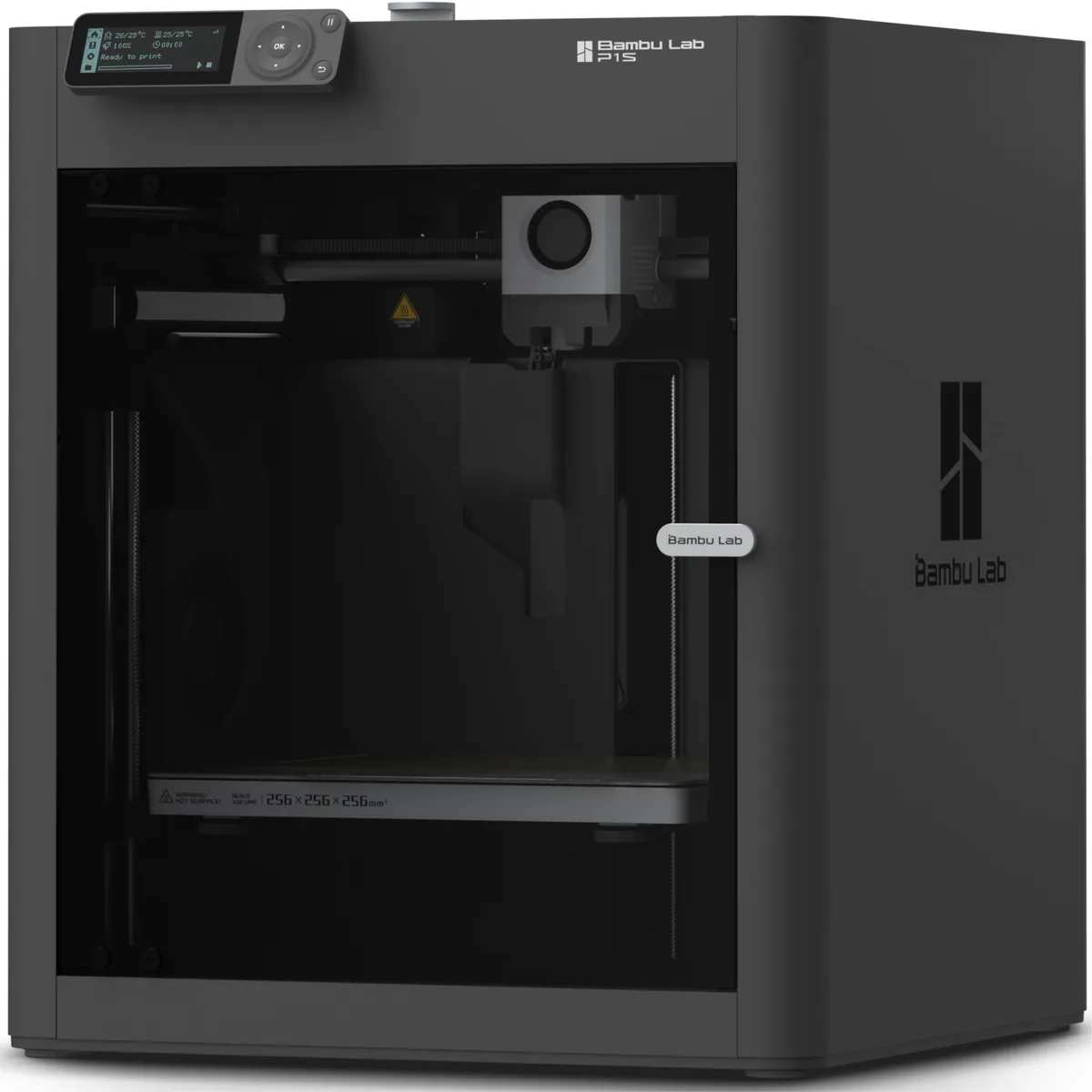
Bambu Lab P1S Enclosed 3D Printer
Pros
- Fully enclosed CoreXY chassis with auxiliary cooling fan, Integrated multi-color / multi-material support with Bambu AMS, Automated first-layer calibration, Active vibration compensation and belt tension monitoring
- Excellent print quality out of the box
- AMS-compatible for multi-color prints
Cons
- Proprietary closed ecosystem
- Chamber is passively heated by the bed rather than a dedicated PTC heater
- Upgrading to hardened nozzle for carbon fiber requires separate swap
Active Chamber Example: QIDI Q1 Pro
Active chamber heating adds a controlled heat source, and QIDI lists a maximum regulated chamber setting of 60°C for the Q1 Pro. The controller compares sensor input with the selected setpoint and adds heat when the chamber falls below that target.
A regulated chamber reduces dependence on waste heat from the bed. Preheating still matters because the frame, panels, bed, and chamber air need time to approach a stable condition. The printer’s 60°C rating is a machine specification, not proof that every ABS grade needs the maximum setting.
Documented diagnostic expectations:
- Warping: A smaller temperature gradient generally reduces corner-lift risk, but bed cleanliness, first-layer calibration, adhesive choice, and part geometry remain relevant.
- Layer Adhesion: Warmer surrounding air slows layer cooling and can reduce cracks in tall ABS parts. No chamber setting guarantees a flawless bond if nozzle temperature or material condition is wrong.
- Failure Mode: A break that crosses roads or walls instead of following one layer suggests better interlayer fusion, but a controlled tensile method is required before assigning a strength percentage.
Verdict: Active chamber heating provides repeatable thermal control for large, tall, or load-bearing ABS parts. It reduces a major source of variation without eliminating the need for a validated material profile.
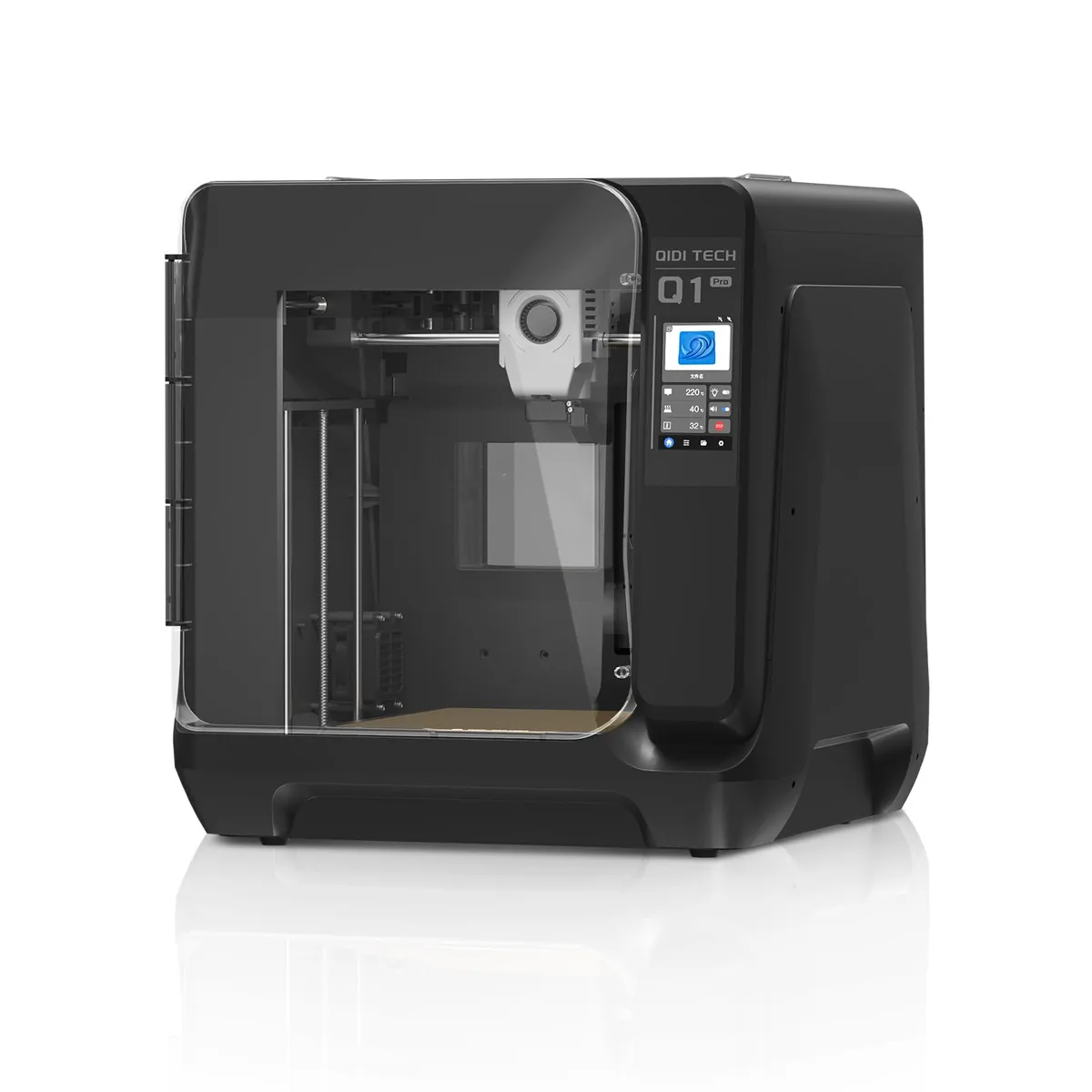
QIDI Q1 Pro High-Temp 3D Printer
Pros
- Dedicated 60°C active PTC chamber heating element eliminates warping on ABS/ASA/Nylon, High-temp bimetal nozzle rated up to 350°C for engineering plastics, Dual independent Z-axis motors with automated bed tilt compensation, Dual filament tangle and runout sensors with integrated chamber camera
- Fully open-source Klipper firmware
- Excellent value for an actively heated machine
Cons
- Industrial aesthetics with a bulkier footprint
- QIDI Studio slicer is less beginner-friendly than Bambu Studio
Specification and Process Comparison
The specification difference is direct: passive systems trap variable waste heat, while active systems regulate a dedicated heater to a rated setpoint. Related models and architectures appear in the 3D printer comparisons section.
| Attribute | Open Frame | Passive Enclosure (P1S) | Active Heater (Q1 Pro) |
|---|---|---|---|
| Chamber Control | No containment or setpoint | Enclosed, unregulated | Dedicated heater with regulated setpoint |
| Heat Source | Room, bed, and hotend | Bed and hotend waste heat | Bed, hotend, and PTC chamber heater |
| Manufacturer Chamber Rating | Not applicable | No heated-chamber setpoint listed | Up to 60°C |
| Room Sensitivity | Highest | Moderate to high | Lower after preheating |
| Primary ABS Risk | Drafts, rapid cooling, warping | Variable upper-layer cooling | Incorrect material profile despite stable air |
| Best Fit | PLA and other low-warp materials | Small or occasional ABS work | Large, tall, or structural ABS work |
Evaluating these thermal control differences is important when selecting the best enclosed 3D printer for specific material needs.
The Final Verdict: Who Needs Active Heating?
Active heating is the stronger choice for large or load-bearing ABS parts, while a passive enclosure is usually sufficient for PLA, PETG, TPU, and occasional smaller ABS work. Filament drying and material profiles remain necessary in either system.
You should choose a PASSIVE ENCLOSURE system (like the Bambu Lab P1S or Creality K1C) if:
- You mostly print with PLA, PETG, and TPU.
- You only print occasional, non-structural parts in ABS or ASA.
- Your workshop is in a climate-controlled room with a stable temperature.
- You prioritize maximum speed and ecosystem convenience over material capability.
You must invest in an ACTIVE CHAMBER HEATING system (like the QIDI Q1 Pro) if:
- You intend to make functional, mechanical parts from ABS, ASA, Nylon, or Polycarbonate.
- Dimensional accuracy and part strength are your primary concerns.
- You are creating jigs, fixtures, enclosures for electronics, or end-use parts that will be under load.
- Your printer operates in a cold basement or garage where passive heat loss is difficult to control.
A passive enclosure buffers the print from drafts and room changes. An active heater adds a controllable thermal variable, which is more appropriate for large ABS parts and repeat production. Neither system establishes part strength on its own; material condition, geometry, slicer settings, and a suitable validation method complete the process. Understanding these thermal management differences helps clarify the broader category of Enclosed 3D Printers.