
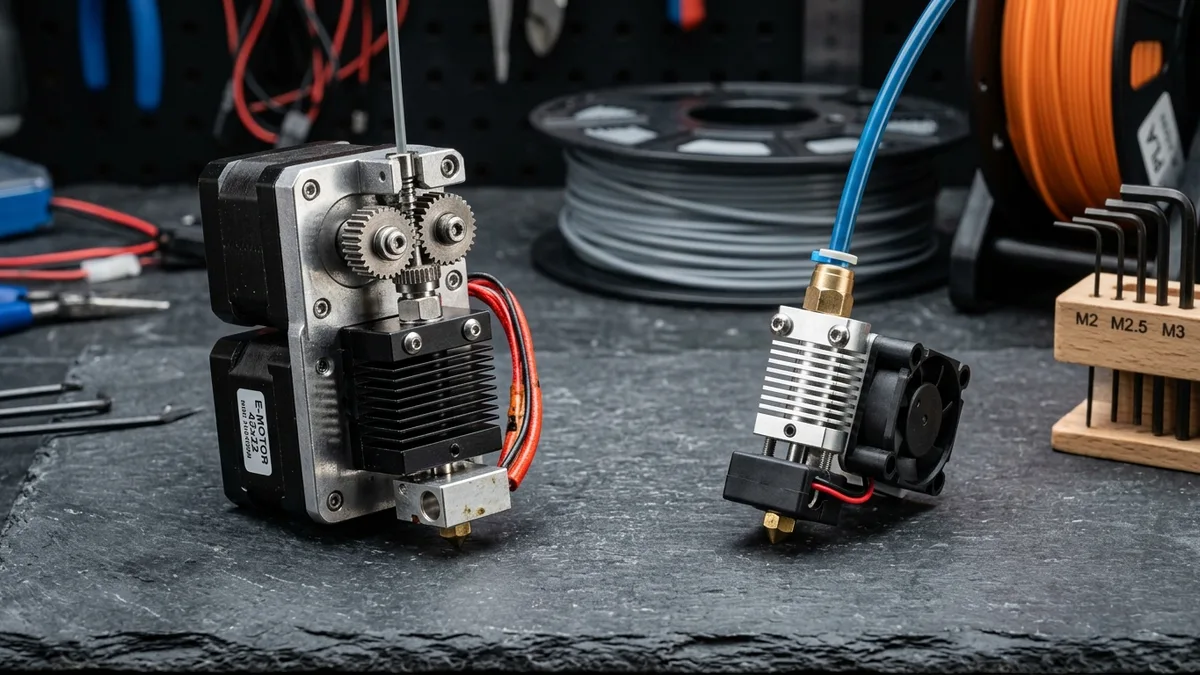
In FDM 3D printing, the extruder is the component that grips and pushes filament into the hotend to be melted. It’s the heart of the printing process. How this system is arranged has a huge impact on your printer’s performance, material compatibility, and maximum print speed. The two dominant designs are Direct Drive and Bowden.
The choice is not just a spec sheet detail. It defines how you tune your printer, what materials you can reliably use, and what kind of artifacts you will fight. Let’s get our hands dirty and break down the real-world mechanics of each system.
What is a Direct Drive Extruder?
A Direct Drive system is exactly what it sounds like. The extruder motor and its drive gear assembly are mounted directly on the print head, right above the hotend.
The entire unit, motor and all, moves together along the X and Y axes. This creates a very short, direct path for the filament. From the moment the drive gears bite into the filament to the moment it exits the nozzle, the distance is minimal, often less than 50mm.
The Mechanical Advantages
The primary benefit is filament control. With almost no distance between the drive motor and the melt zone, the extruder has immediate, precise authority over the filament.
- Retraction is crisp and short. Typical retraction settings are between 0.5mm and 2.0mm. This drastically reduces stringing and oozing, leading to cleaner prints.
- Flexible filaments are no problem. Soft materials like TPU have a tendency to bend, buckle, and compress. The constrained path of a Direct Drive extruder gives these filaments no room to misbehave. It’s the go-to choice for printing flexibles.
- Less reliance on firmware compensation. Because there is very little “slop” in the system, you can achieve great results with minimal tuning of features like Pressure Advance or Linear Advance.
The Physical Trade-Offs
The main disadvantage is mass. Strapping a NEMA 17 stepper motor to the print head adds significant weight. This inertia affects the motion system.
- Ringing and Ghosting: When the heavy print head changes direction quickly, its momentum can cause vibrations that appear as wavy artifacts on your print’s surface.
- Lower Acceleration Limits: To combat ringing, you must limit acceleration and jerk settings in your firmware. This can cap the “quality” print speed on less rigid frames, like a typical i3-style bed slinger. A well-tuned Direct Drive setup on an Ender 3 might produce its best work around 80-150 mm/s.
- Maintenance Can Be Cramped: Everything is packed tightly together, which can make accessing the hotend or extruder gears more involved.
What is a Bowden Extruder?
In a Bowden setup, the extruder motor is mounted remotely, usually on the printer’s frame. It pushes the filament through a long, flexible polytetrafluoroethylene (PTFE) tube to the hotend. This tube is called the Bowden tube.
Think of it like a brake cable on a bicycle. The force is applied at one end and transmitted through the tube to the other.
The Mechanical Advantages
The key benefit here is reducing the mass of the moving print head. By offloading the heaviest component (the motor), the print head becomes incredibly light.
- Higher Acceleration and Speed: A light print head can change direction with much less momentum. This allows for very high acceleration values (up to 20,000 mm/s² on some machines) and faster travel moves, reducing overall print time.
- Less Ringing: With less mass to throw around, the potential for ghosting artifacts is significantly lower at equivalent speeds.
- Simpler Print Head Assembly: The hotend is isolated, often making it easier to access for nozzle swaps or clog removal.
The Physical Trade-Offs
The long Bowden tube introduces its own set of problems related to friction and compression. The filament acts like a spring inside the tube.
- Imprecise Retraction: To pull the filament back and stop oozing, the motor has to retract a much longer length to account for the slack in the tube. Retraction settings are typically much higher, from 4mm up to 8mm. This can be slow and may cause grinding on the filament with repeated retractions.
- Poor Performance with Flexibles: Trying to push a soft, noodle-like filament through a long tube is a recipe for failure. The filament will compress and buckle inside the tube, leading to an instant clog.
- High Dependence on Firmware: Features like Pressure Advance are almost mandatory to get clean corners and consistent extrusion. You must tune the firmware to compensate for the delay and compression in the Bowden tube. For help with printer calibration, review our guide on how to properly set up a 3D printer.
Speed Limits and Volumetric Flow
Speed in 3D printing is a complex topic. It’s not just the mm/s travel speed your slicer reports. The true bottleneck is often volumetric flow, measured in mm³/s. This is how much plastic your hotend can effectively melt and extrude per second.
Volumetric Flow (mm³/s) = Layer Height (mm) * Extrusion Width (mm) * Speed (mm/s)
A standard hotend might top out around 15-20 mm³/s. A high-flow hotend can reach 30-50 mm³/s or more.
- Bowden Speed: A Bowden system can move the print head very fast (e.g., 500 mm/s), but if the hotend can only melt 15 mm³/s of plastic, you won’t be able to print at that speed with a standard 0.4mm nozzle and 0.2mm layers. The speed is limited by melt rate and the extruder’s ability to precisely control flow over a long distance.
- Direct Drive Speed: On a bed-slinger, the speed is limited by the gantry’s inertia. But on a rigid CoreXY frame, a Direct Drive extruder paired with a high-flow hotend and input shaping can achieve extremely high and high-quality print speeds.
This is why modern high-speed printers almost exclusively use Direct Drive.
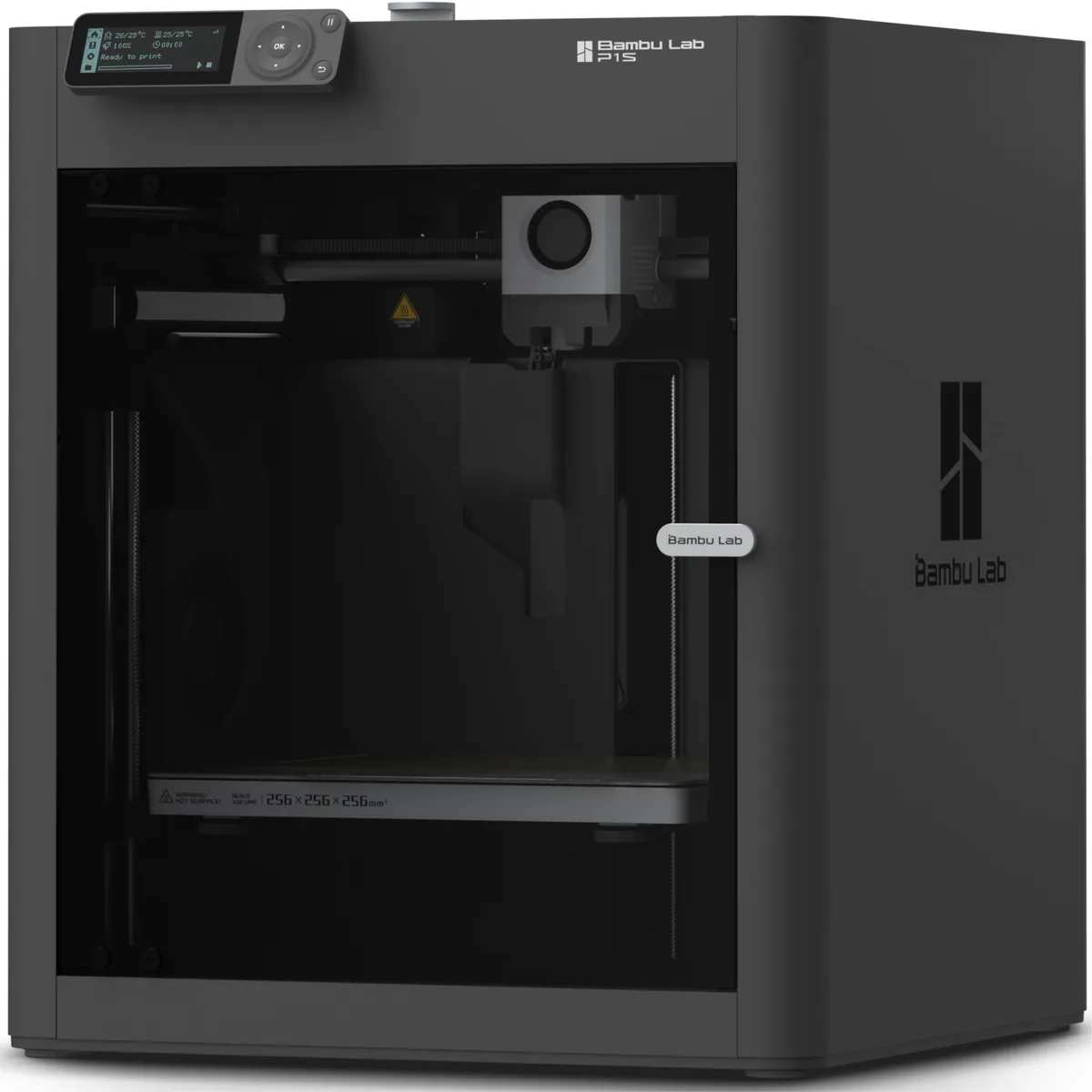
Bambu Lab P1S Enclosed 3D Printer
Pros
- Fully enclosed CoreXY chassis with auxiliary cooling fan, Seamless multi-color / multi-material integration with Bambu AMS, Reliable out-of-the-box first layers with dual automated bed leveling, Active vibration compensation and belt tension monitoring
- Direct drive handles all filament types
- Enclosure is great for ABS/ASA
Cons
- Proprietary closed ecosystem
- Chamber is passively heated by the bed rather than a dedicated PTC heater
- Upgrading to hardened nozzle for carbon fiber requires separate swap
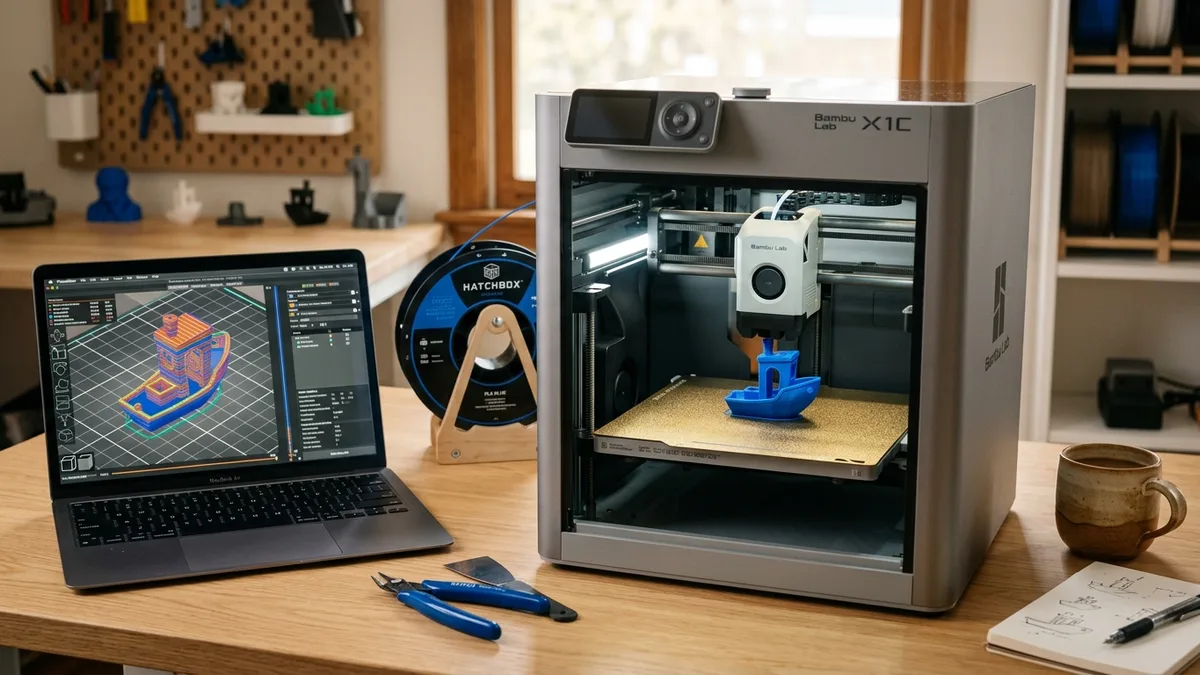
The Bambu Lab P1S is a perfect example of modern Direct Drive engineering. Its rigid CoreXY frame handles the inertia, while the direct extruder provides the precision needed for high-speed material deposition. The system uses vibration compensation (input shaping) to actively cancel out ringing, allowing it to print at speeds that were once impossible for a Direct Drive system.
Comparison Table: At a Glance
| Feature / Parameter | Direct Drive | Bowden |
|---|---|---|
| Typical Retraction | 0.5 mm - 2.0 mm | 4.0 mm - 8.0 mm |
| Flexible Filament (TPU) | Excellent | Poor / Prone to failure |
| Print Head Mass | High | Low |
| Potential for Ringing | High (without input shaping) | Low |
| Max “Quality” Speed | Frame dependent (up to 500+ mm/s on CoreXY) | Flow rate dependent (~60-120 mm/s) |
| Stringing / Oozing | Low | High (requires careful tuning) |
| Common Failure Point | Heat creep in compact heads | Clogs or friction in the PTFE tube |
| Ideal For | Material versatility, highest quality | Budget machines, simple PLA/PETG prints |
How to Choose: A Practical Framework
The lines between these two systems are blurring, but there are still clear reasons to choose one over the other.
You should choose a Direct Drive printer if:
- You plan to print with a wide variety of materials, especially flexible TPU or abrasive carbon fiber nylons. If you need a workhorse that can handle anything, Direct Drive is the answer.
- You prioritize perfect, clean prints with minimal post-processing and are willing to tune your machine for quality.
- You are buying a modern, high-speed CoreXY printer. In this category, Direct Drive is the standard for a reason.
You might still prefer a Bowden printer if:
- Your primary concern is the initial cost of the machine. Most entry-level printers use a Bowden setup to save cost and complexity.
- You almost exclusively print with standard PLA and PETG. A well-tuned Bowden system handles these materials just fine.
- You are an advanced user who enjoys tinkering and can expertly tune firmware features like Pressure Advance and retraction to overcome the system’s limitations.
Ultimately, both systems can produce fantastic prints. The extruder is just one piece of a complex machine. Understanding its strengths and weaknesses is the key to pushing your printer to its limits and getting the results you want, every single time. These concepts are helpful when choosing your first 3D printer. You can read more about printer types in FDM vs SLA vs SLS: 3D Printing Technologies Explained. Explore further topics in our 3D printing how-to guides collection.