
The Anycubic Photon review process involves analyzing the manufacturer specifications and available models to determine which resin printer fits a specific use case. The Anycubic Photon series encompasses a range of LCD resin desktop printers designed for high-detail model making and prototyping. This article evaluates the specifications of the Anycubic Photon series, starting with a definition of the product line. It then details the exact specifications of the Photon P1 and the Photon Mono 4. Following that, it covers the older models like the Photon Zero and their specific resolution limits. Finally, it discusses alternatives to resin printing and provides a summary of model suitability for different projects.
What Is the Anycubic Photon Series?
The Anycubic Photon series is a collection of desktop resin 3D printers that use liquid photosensitive resin and an LCD masking screen to produce highly detailed printed parts. These machines cure the liquid resin layer by layer using a targeted light source, offering significantly higher surface precision than typical filament extrusion processes. According to Anycubic, the company has updated the series from its original models to more advanced iterations featuring 10K and 14K monochrome screens.
Understanding the differences between these models requires looking at their listed specifications, hardware capabilities, and overall print volumes. You can find more 3D Printer Reviews that cover various brands and printing technologies in our dedicated section. The Photon series focuses primarily on providing high-resolution capabilities for hobbyists creating tabletop miniatures, as well as professionals needing fine surface details for jewelry or dental models. By utilizing upgraded components like monochrome LCD screens and specialized LighTurbo light sources, these printers aim to reduce layer curing times and improve overall print consistency. As shown in Anycubic’s product specifications, the progression of the series highlights a continuous increase in pixel density, moving from standard HD resolutions to 14K precision. The shift from standard RGB screens to monochrome panels in later models like the Mono series allows more UV light to pass through, which decreases the required exposure time per layer and extends the operational lifespan of the screen itself.
Anycubic Photon P1 Specifications and Features
The Anycubic Photon P1 specifications include a 14K monochrome LCD display and a substantial build volume, making it a prominent model in the current lineup. According to 3DWithUs, the printer provides a build volume of 223 by 126 by 230 millimeters. The machine dimensions measure 366 by 338 by 539 millimeters, and the total unit weighs 13.6 kilograms. This model utilizes a light source that combines a COB (Chip on Board) LED array, a Fresnel lens, and a mask to achieve a listed light uniformity of over 92 percent. Anycubic equips the P1 with an Auto-Leveling 3.0 system that incorporates physical feedback to simplify the initial setup process for the operator. The touchscreen interface uses a 4.5-inch resistive panel to control the print settings and monitor progress.
The Z-axis assembly relies on an industrial-grade ball screw paired with dual linear rails. This mechanical structure aims to reduce layer lines and Z-wobble during printing. The print platform is constructed from a precision-ground steel plate for improved adhesion and stability during the printing cycle. Connectivity options include USB 2.0, Wi-Fi, and a 2.4 GHz LAN connection, allowing users to send files and monitor prints remotely across a local network. The printer includes a built-in 480p camera equipped with LED lighting and a privacy cover. This camera integrates with the Anycubic mobile application for live monitoring and time-lapse video capture, though 3DWithUs notes that it is not a high-resolution camera. Anycubic also states that the Photon P1 supports high-viscosity resins up to 8000 cps. The P1 also includes AI monitoring features such as a build plate check, bottom-layer separation detection, resin level inspection, and residue detection to prevent print failures.
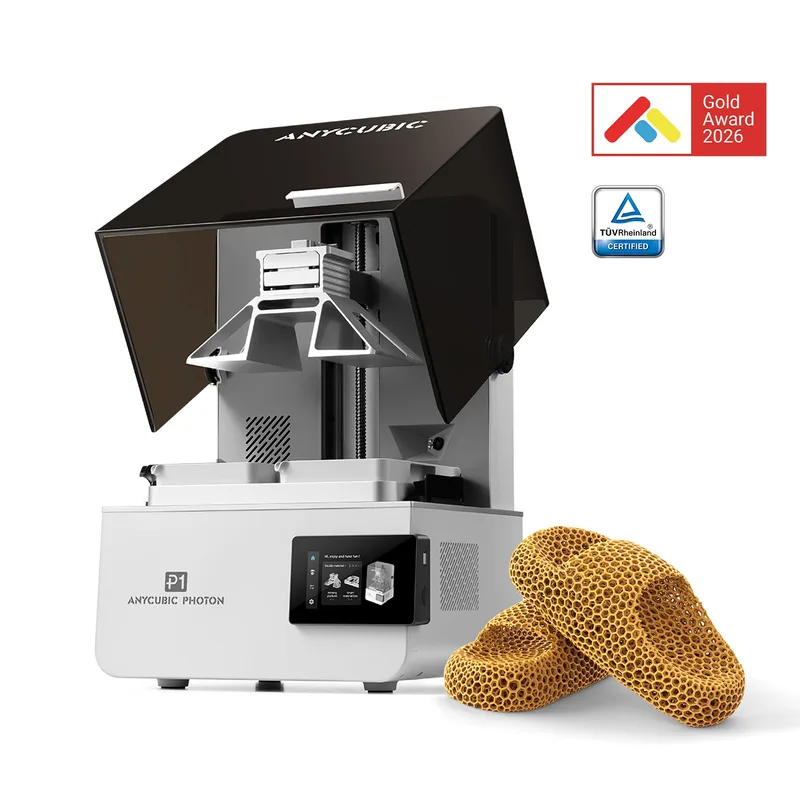
Anycubic Photon P1 14K
Pros
- Wave release technology reduces peel force by up to 60 percent
- Dynamic release 3.0 monitors real-time layer separation forces
- LighTurbo 4.0 optical engine features an aspherical Fresnel lens
Cons
- Dual-material print kit is an optional add-on
- Does not support automatic recognition and heating functions for dual-platform cartridges
- Airpure 2.0 purifier is an optional accessory
Resin Vat Heating and Auto-Leveling
The resin vat heating system on the Anycubic Photon P1 maintains the liquid material at an optimal temperature, while the latch mechanism replaces traditional tightening screws for easier handling. According to 3DWithUs, the vat has a total capacity of 1000 milliliters and connects to the printer via a dedicated thermal heating port. The preheating function is designed to raise the resin temperature from roughly 19 degrees Celsius to 25 degrees Celsius to ensure optimal viscosity. During this active heating cycle, the build plate gently agitates the resin to distribute the heat evenly throughout the vat. 3DWithUs reports that some resin residue can appear around the vat edges during this agitation process. Both the resin vat and the build plate use a quick-release latch system instead of conventional tightening knobs, which speeds up the installation and removal process. The vat is also fitted with Wave Release Film (NFEP), which Anycubic claims lowers peel forces compared to standard smooth FEP films, reducing the stress applied to delicate supports during the retraction phase of printing.
Anycubic Photon Mono 4 Specifications
The Anycubic Photon Mono 4 specifications center around its 10K monochrome LCD screen and its ability to deliver fast print speeds for detailed models. This printer provides a print volume of 6.04 by 3.42 by 6.49 inches, offering a compact footprint for desktop use. Anycubic states that the Mono 4 uses an upgraded LighTurbo Matrix light source, which provides consistent UV exposure across the entire build area. The monochrome screen allows for quicker layer curing times, leading to a maximum stated print speed of up to 70 millimeters per hour on the standard Mono 4 model.
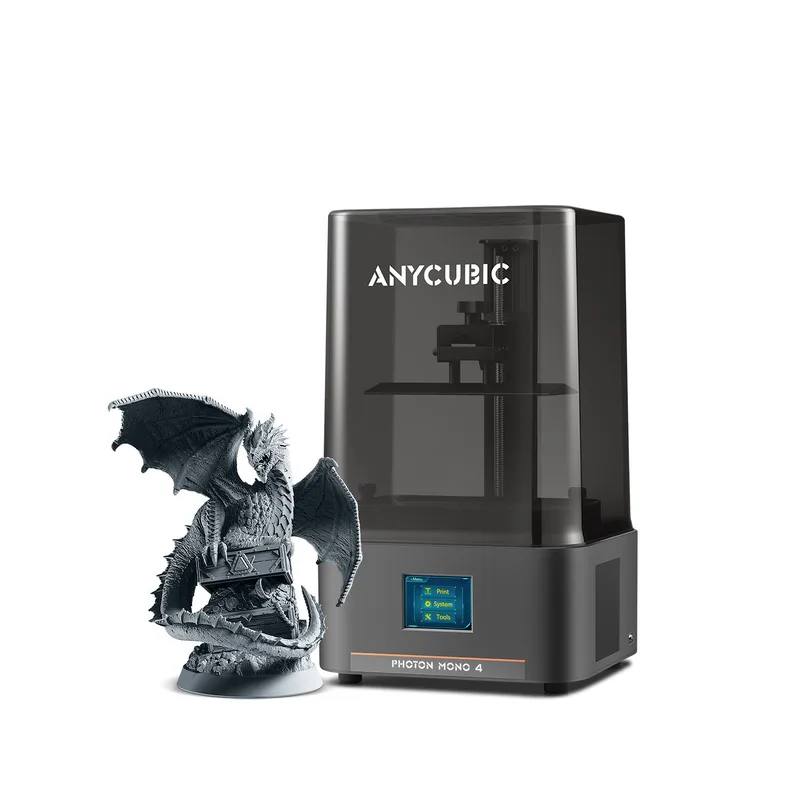
Anycubic Photon Mono 4
Pros
- 10K screen gives 17 x 17 micron pixels, 4-point leveling
- Hinged cover supports one-handed operation
Cons
- Dynamic temperature control resin vat is not supported
- Resin auto-fill unit is not supported
- Activated carbon air purifier is sold separately
The user interface is accessed through a touchscreen panel, which streamlines the printing process and allows for easy adjustments to print parameters without needing external devices. The machine includes a power-off resume function, which prevents the complete loss of a print if the power supply is accidentally interrupted. Anycubic also offers an Ultra version of this machine, which features a 7-inch HD mono screen and a COB light source configuration. The Mono 4 Ultra provides an increased maximum print speed of up to 120 millimeters per hour and includes intelligent detection features to monitor the printing process in real time.
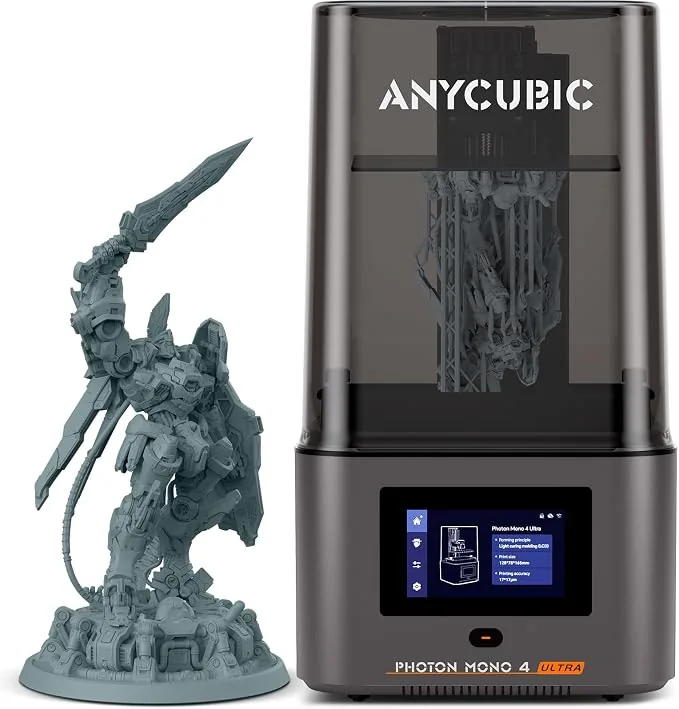
Anycubic Photon Mono 4 Ultra 10K Resin 3D Printer
Pros
- Sharp 10K resolution in a compact desktop format
- High print speed with ACF release film
- User-friendly touchscreen interface with automatic level checks
Cons
- Smaller build envelope compared to 10-inch flagships
The Photon Mono 4 series is positioned as a high-performance option for users who need sharp details without the larger footprint of the P1 model. Anycubic states that the availability of 10K resolution in this size class makes it suitable for printing complex tabletop miniatures and fine jewelry components. Anycubic also provides replacement FEP films specifically designed for the Mono 2 and Mono 4, featuring an integrated design that simplifies the replacement process when the original film wears out or becomes clouded.
Anycubic Photon Zero and Original Models
The Anycubic Photon Zero and the original Anycubic Photon represent the earlier, budget-focused iterations of the product line. The Photon Zero is a compact printer with overall dimensions of 180 by 195 by 367 millimeters and a total weight of 4.7 kilograms. According to 3DPrintBeginner, it features a small build volume of 95 by 54 by 150 millimeters. The Zero utilizes a standard color LCD screen rather than a modern monochrome panel, which affects both the final resolution and the layer curing times. Power consumption is listed at a maximum of 30 watts, and the Z-axis motion system uses a single linear rail with a standard lead screw.
The original Anycubic Photon, released several years ago, featured a build area of 115 by 65 by 155 millimeters and a 2560 by 1440 resolution LCD screen. MakerFun3D notes that the original Photon used a 405 nm UV LCD masking screen and consumed an average of 34 watts during operation. The original model required users to use the proprietary slicer software, and the leveling process involved multiple manual steps. If you want to know how to compare 3D printers effectively, looking at the evolution of these models provides a clear picture of how hardware specifications change over time. The transition from these early models to the current Mono and P-series demonstrates the industry shift toward higher pixel densities, specialized light arrays, and simplified leveling mechanisms.
Resolution Limitations and Print Quality
According to 3DPrintBeginner, the resolution limitations of the Photon Zero restrict its ability to produce the finest XY details compared to modern 10K or 14K printers. 3DPrintBeginner states that the Zero has an LCD resolution of 854 by 480 pixels. Because the individual pixels are physically larger, the lack of resolution becomes visible on small prints, even when the 16X anti-aliasing software setting is enabled. While it is technically capable of printing tabletop miniatures at a 30-micron Z-layer height, surface marks and voxel lines are more pronounced than on higher-resolution screens. According to 3DPrintBeginner, the Z-axis resolution is highly adjustable depending on the user settings. For users requiring absolute precision, 3DPrintBeginner notes that the XY resolution of the Zero falls short of the higher XY precision found in newer 14K flagship models from Anycubic.
Anycubic lists the Photon Mono M7 Pro 14K Resin 3D Printer as a high-speed flagship model featuring a 10.1-inch mono LCD that delivers 16.8 by 24.8 micron XY precision. According to the manufacturer, this printer achieves speeds up to 170 millimeters per hour and includes a dynamic peristaltic resin auto-fill system. It also features a built-in vat heating element designed to maintain an optimal 25-degree Celsius viscosity during printing.
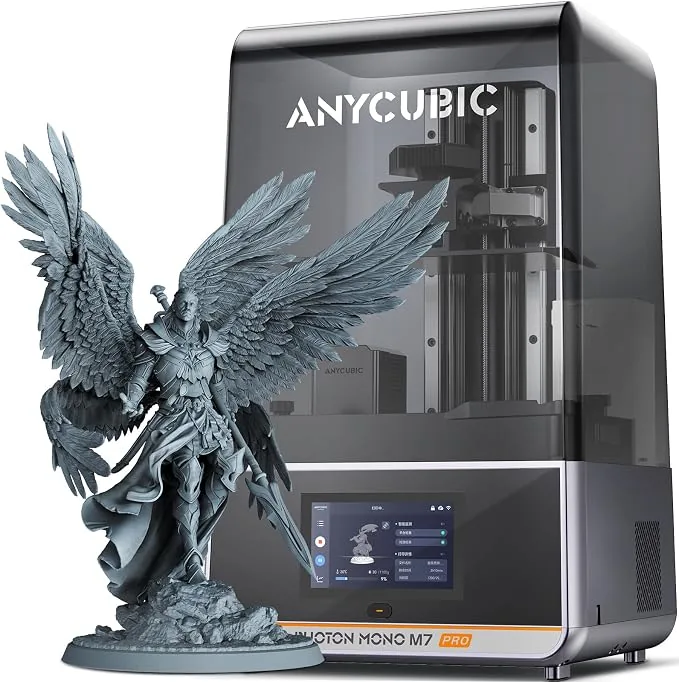
Anycubic Photon Mono M7 Pro 14K Resin 3D Printer
Pros
- Industry-first 14K mono LCD delivers unmatched 16.8x24.8 micron XY precision
- Dynamic peristaltic resin auto-fill and auto-recycle system eliminates mid-print running out
- Built-in vat heating element maintains optimal 25°C viscosity in cold workshops
- Advanced LightTurbo 3.0 COB optical system ensures uniform 90%+ UV exposure
Cons
- Higher initial price point for hobbyists
- Anycubic slicer ecosystem requires familiarity
Alternatives to Anycubic Photon Resin Printers
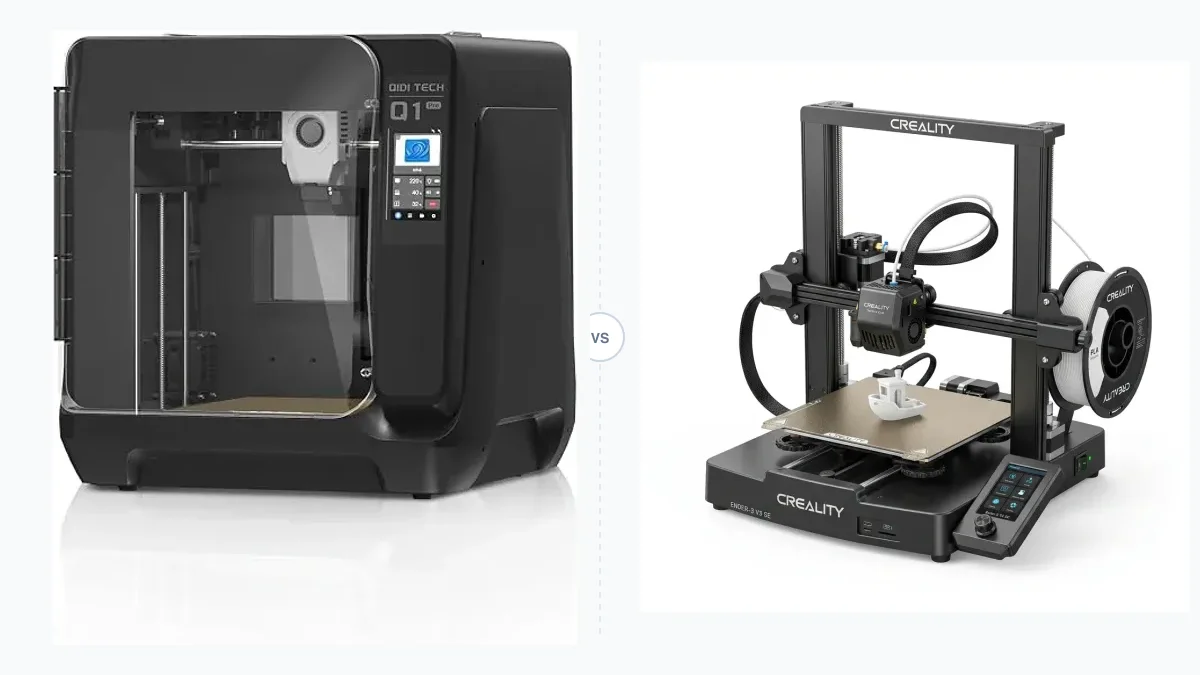
Alternatives to Anycubic Photon resin printers include machines that use FDM technology or competing resin printers from other established brands. Filament-based FDM printers melt plastic wire through a heated nozzle, which generally results in visible layer lines and lower overall surface detail compared to liquid resin masking. However, FDM printers are often preferred for larger functional parts because the printed materials are less brittle and do not require chemical post-processing with isopropyl alcohol. For a deeper look at a specific FDM alternative, you can read our Creality Ender 3 V3 SE Research-Based Review: Specs, Limits and Alternatives.
Within the resin market, brands like ELEGOO and Phrozen offer direct alternatives. For instance, according to manufacturer specifications, the ELEGOO Mars series targets the exact same compact desktop segment as the Photon Mono line, providing similar 9K and 10K resolutions in a comparable footprint. The Uniformation GK3 Pro and PioCreat HALOT-X1 compete directly with the larger Photon P1. 3DWithUs notes that the Photon P1 differentiates itself from these specific competitors through its latch-based vat system and comprehensive automated pre-start checks. Buyers must weigh the benefits of Anycubic’s specific hardware ecosystem against the features offered by these alternative manufacturers.
Summary of Anycubic Photon Suitability
The summary of Anycubic Photon suitability depends entirely on the specific requirements for resolution, total build volume, and printing speed. According to 3DWithUs, the Anycubic Photon P1 provides the largest build volume among the reviewed models at 223 by 126 by 230 millimeters, and its 14K resolution is suited for users who need maximum detail alongside automated features like active vat heating and AI failure detection. According to Anycubic, the Photon Mono 4 and Mono 4 Ultra offer a more compact physical footprint with a 6.04 by 3.42 by 6.49-inch build volume, delivering 10K resolution and speeds up to 120 millimeters per hour for fast, high-quality output on smaller projects. The older Photon Zero serves strictly as a legacy budget option, limited by its 854 by 480 pixel screen and 95 by 54 by 150 millimeter build space. By examining these manufacturer specifications and published reviews, users can match the correct Photon model to their specific 3D printing requirements.