
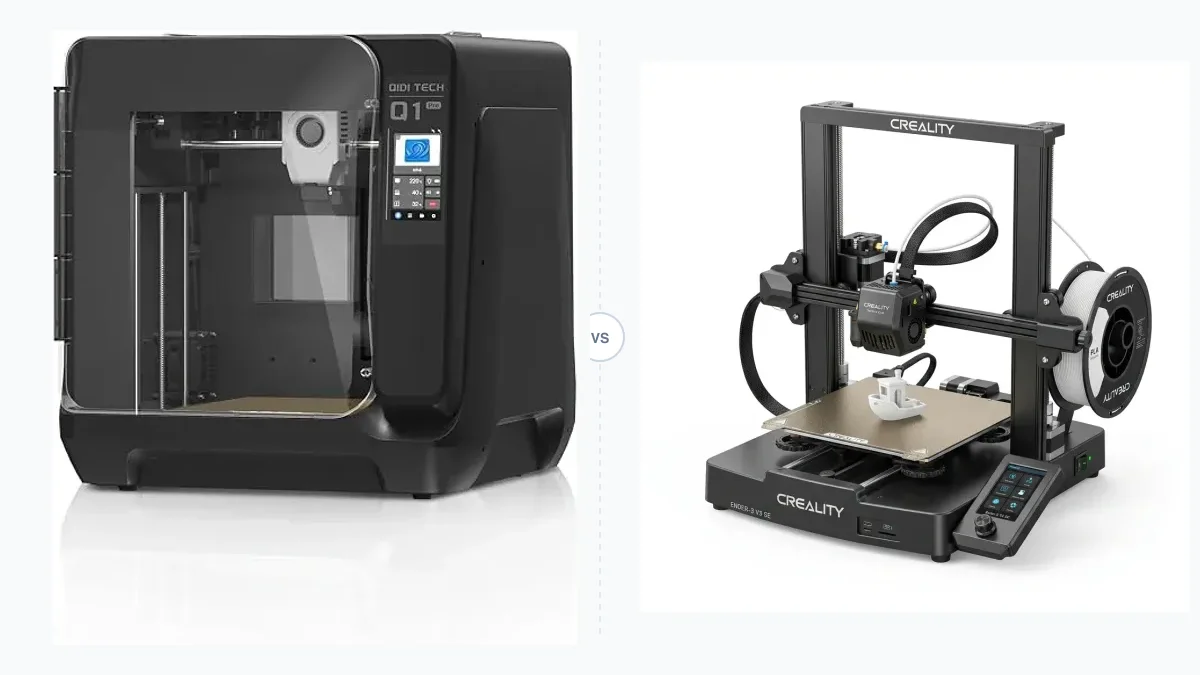
CoreXY 3D printers favor lower moving mass and enclosure integration, while bed slingers favor simpler independent axes and easier mechanical access. This comparison defines the bed-slinger and CoreXY systems, compares their technical trade-offs, explains moving mass, reviews the current product shift, and ends with a project-based decision framework.
What Is a Bed Slinger (i3-Style)?
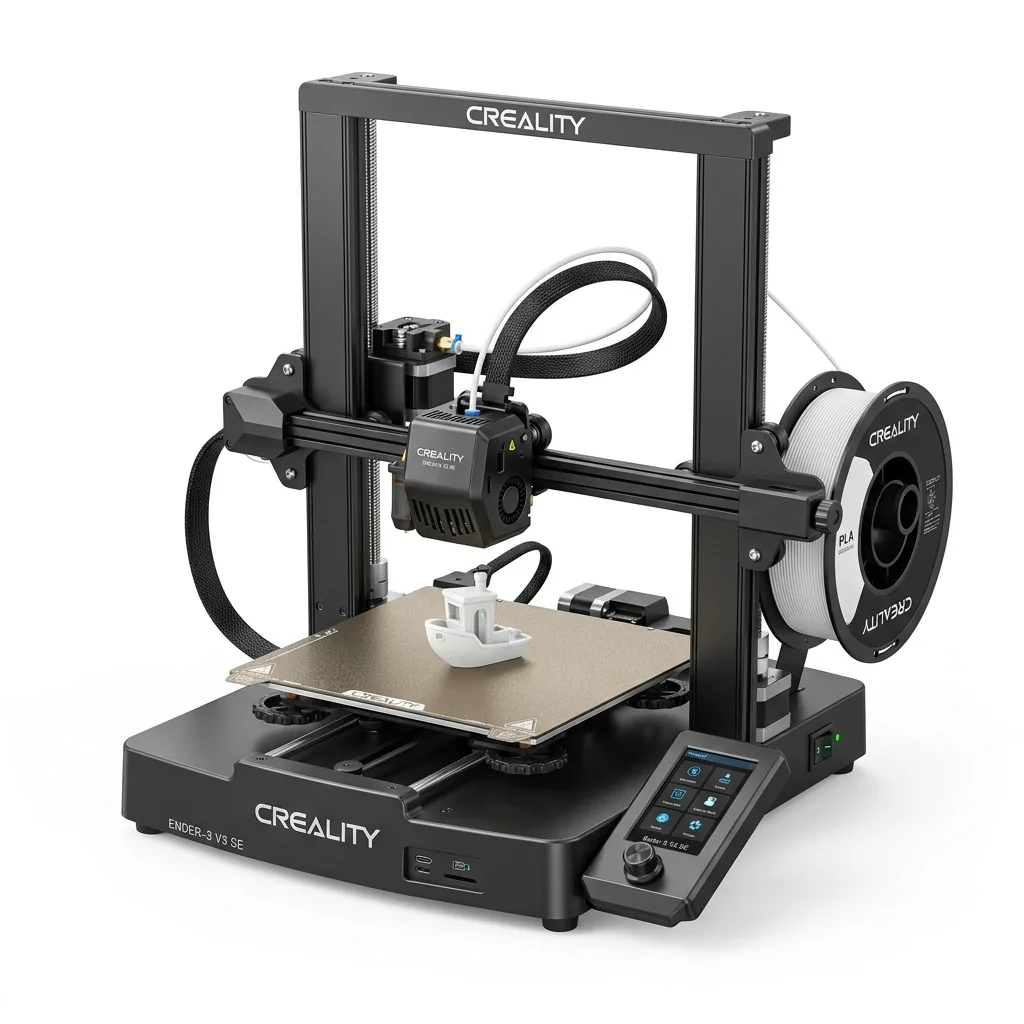
A bed slinger is an FDM 3D printer whose build plate moves along the Y-axis while the toolhead moves along the X-axis and the gantry or bed supplies Z motion.
- X-Axis: The print head moves left and right along a gantry.
- Y-Axis: The entire build plate (the “bed”) moves forward and backward.
- Z-Axis: The X-axis gantry moves up and down.
This design uses independent X and Y drives, which can make axis-specific inspection more direct. A dimensional error still requires checking the full motion path, calibration, material, and slicer profile rather than assuming one failed component.
The main bed-slinger constraint is Y-axis inertia. The motor moves the bed, build surface, and growing part, so usable acceleration depends on total moving mass, frame stiffness, input shaping, material flow, and the required surface quality.
What Is a CoreXY?
CoreXY is an FDM motion system in which two stationary motors coordinate a lightweight toolhead in X and Y while the build plate moves on the Z-axis.
How does it work? A CoreXY system uses two long, parallel timing belts and two stationary stepper motors. The motors work together in a coordinated way to position the toolhead anywhere on the XY plane.
- To move along the X-axis, both motors turn in opposite directions.
- To move along the Y-axis, both motors turn in the same direction.
- To move diagonally, one motor turns while the other remains still, or they turn at different speeds.
This belt system is more complex than separate bed-slinger axes, and belt routing and tension affect dimensional output. The fast-moving mass is concentrated in the toolhead instead of the bed and printed part.
Lower XY moving mass gives the motion system more acceleration headroom, while frame stiffness, belt condition, toolhead weight, input shaping, and material flow still limit usable speed and surface quality.
Head-to-Head: The Technical Comparison
The technical comparison separates architecture-level tendencies from model-specific specifications; no universal speed or accuracy number applies to every CoreXY or bed slinger.
| Feature | Bed Slinger (i.e., Ender 3 V3 SE) | CoreXY (i.e., QIDI Q1 Pro, Bambu P1S) | Decision factor |
|---|---|---|---|
| Speed and acceleration | More moving Y-axis mass as the part grows | Lower moving mass in the XY plane | Complete motion and material-flow limits |
| Print quality | Tall parts move with the bed | The part stays on a Z-moving platform | Frame, profile, material, and part geometry |
| Footprint | Needs clearance for full Y-axis bed travel | Uses a cubic motion envelope | Service, ventilation, and travel clearance |
| Mechanical complexity | Separate X and Y drive paths | Coupled CoreXY belt path | Access, manual, parts, and maintenance skill |
| Enclosure | Model-specific | Common in cubic consumer designs | Material and printer documentation |
| Price | Model-specific | Model-specific | Current complete-system cost |
Why Moving Mass Matters
A bed slinger moves the bed and growing part along Y, while CoreXY moves the toolhead in the XY plane. That difference changes moving mass as a print grows.
This inertia is the source of ringing or ghosting. When the heavy bed changes direction, the printer’s frame shudders. That vibration translates into wavy artifacts on your print’s surface, especially noticeable around sharp corners. While technologies like Klipper’s input shaping can help cancel out these vibrations, they can’t eliminate the physics of a massive moving object.
A CoreXY printer reduces XY moving mass, but frame stiffness, belt condition, toolhead weight, material flow, acceleration, and the selected profile still determine ringing and print time.
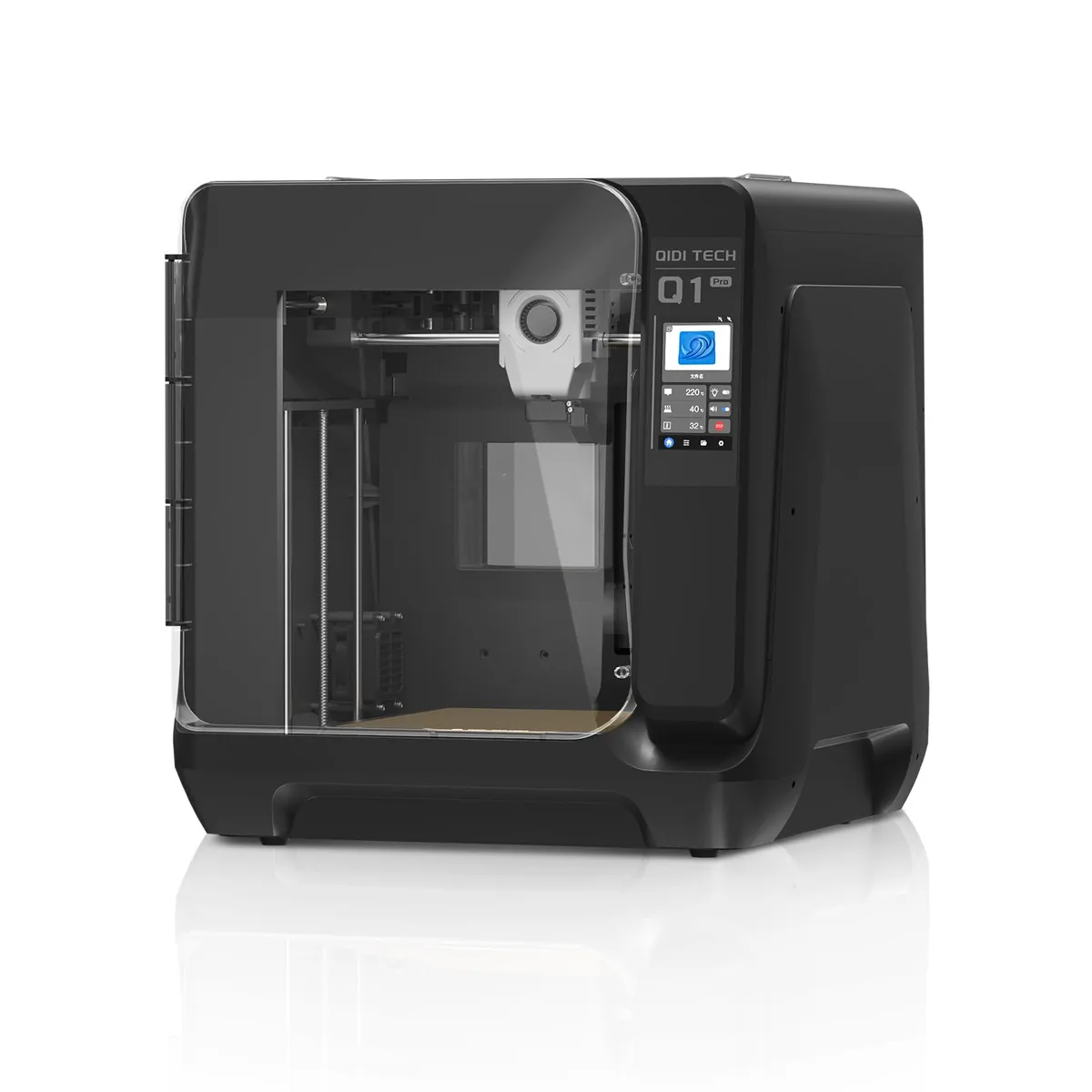
QIDI Q1 Pro High-Temp 3D Printer
Pros
- QIDI lists a 60°C active PTC chamber heater, a bimetal nozzle rated to 350°C, dual independent Z-axis motors with bed-tilt compensation, filament sensors, and a chamber camera
- QIDI lists assembly, automatic bed leveling, and input shaping.
- The enclosed configuration targets material profiles that need controlled thermal conditions.
Cons
- Industrial aesthetics with a bulkier footprint
- QIDI Studio slicer is less beginner-friendly than Bambu Studio
The Rise of the Affordable CoreXY
Affordable CoreXY options expanded as manufacturers introduced preassembled consumer models with calibration features and enclosed frames. Earlier choices often centered on enthusiast-built systems, while bed slingers were common among entry-level products.
Current product catalogs include preassembled CoreXY printers with automated calibration and enclosed frames. Models like the Creality K1C (Amazon, B0CQKTYWXS) and the Bambu Lab P1S (Amazon, B0CHDM8VVZ) bring those features into consumer desktop systems.
The available features depend on the model and its documentation:
- Automatic bed leveling: A sensor-driven routine measures the build surface, but the manual still defines preparation and calibration requirements.
- Input shaping: Model-specific calibration can compensate for measured resonance within the configured motion limits.
- Pressure advance: A calibrated setting adjusts extrusion response during speed changes.
- Enclosures: An enclosure can support temperature-sensitive material profiles when the printer and material documentation specify suitable conditions.
Decision Framework: Which Architecture Is Right for You?
The right architecture depends on the project’s speed target, part height, enclosure needs, maintenance tolerance, available footprint, and budget.
Choose a Bed Slinger if:
- Your budget is the main constraint. Compare current complete-system prices, including enclosure, replacement parts, and required tools.
- You are a tinkerer who values simplicity. The separate axes and simple mechanics make bed slingers easier to repair, modify, and understand from the ground up. You can learn the fundamentals of 3D printing by taking one apart.
- Speed is not your primary concern. A bed slinger can fit projects whose quality and completion-time requirements stay within the selected machine and profile.
Choose a CoreXY if:
- You prioritize lower XY moving mass. Rapid prototyping can benefit from a CoreXY design when material flow, cooling, and the selected profile support the target speed.
- You want to use temperature-sensitive materials. A cubic enclosed model can fit documented ABS, ASA, nylon, or polycarbonate profiles when its hotend, bed, chamber behavior, ventilation, and material guidance support them.
- You print tall, delicate models. A CoreXY keeps the part off the fast-moving XY axes, but adhesion, Z motion, geometry, acceleration, and the selected profile still control stability.
- You value a compact footprint. A CoreXY chassis does not need rear clearance for full Y-axis bed travel, though the machine still needs service and ventilation space.
Desktop 3D Printer Comparison Chart
When deciding on an architecture, seeing how these mechanics affect the final product’s specs can be helpful. View our comprehensive 3D printer comparison chart to evaluate how these differences translate into real-world capabilities.
Bambu Lab P1S vs QIDI Q1 Pro
If you have decided that an enclosed CoreXY printer fits your needs, the next step is choosing a specific model. Check out our detailed look at the Bambu Lab P1S vs QIDI Q1 Pro: Which Enclosed CoreXY Wins? to see two leading contenders.
CoreXY is the stronger architecture when lower XY moving mass, a stationary bed, and enclosure integration matter most. A bed slinger remains the stronger fit when simple mechanics, direct repair access, and lower system cost outweigh peak motion performance. The best choice is the architecture whose complete printer specification fits the project. To see how different models compare across both these motion systems, check out our 3D printer head-to-head comparisons.