
The best 3D printer for the money provides the highest print reliability, print speed, and material compatibility relative to its upfront purchase price. Buyers evaluate value by matching a printer’s build volume, active chamber heating, and ecosystem support against their specific project requirements. This guide evaluates the top options on the market, starting with the criteria for value, reviewing the best overall and entry-level picks, grouping high-speed enclosed models, detailing resin alternatives, and analyzing total ownership cost.
What Defines the Best 3D Printer for the Money?
The best 3D printer for the money is a machine that delivers consistent print quality and material versatility without requiring continuous manual calibration or expensive upgrades. Value in consumer 3D printing is measured by the ratio of successful prints to the total cost of ownership. A printer that costs slightly more upfront but completes projects reliably often presents better long-term value than a heavily discounted model that requires frequent maintenance. Factors determining value include the motion system architecture, the maximum hotend temperature, the inclusion of an enclosure, and the availability of replacement parts. A comprehensive desktop 3D printer buying guide helps clarify how these features align with specific fabrication needs. Machines equipped with CoreXY kinematics, direct drive extruders, and automated bed leveling currently offer the highest return on investment for both hobbyists and professionals.
Best Overall Value: Bambu Lab P1S
The Bambu Lab P1S is the all-round value pick because Bambu Lab lists a fully enclosed CoreXY chassis, active vibration compensation and a 500mm/s maximum speed in one machine. The enclosed environment allows the P1S to print temperature-sensitive materials like ABS and ASA with significantly reduced warping. According to Bambu Lab’s product specifications, the machine features a 256x256x256mm build volume and a nozzle capable of reaching 300°C. The P1S integrates with the Bambu AMS unit to enable multi-color and multi-material prints without manual filament changes. The dual automated bed leveling system ensures perfect first layers right out of the box, drastically reducing the learning curve for new users. While it operates within a proprietary closed ecosystem, the reliability and print quality justify the investment for users seeking a dependable workhorse.
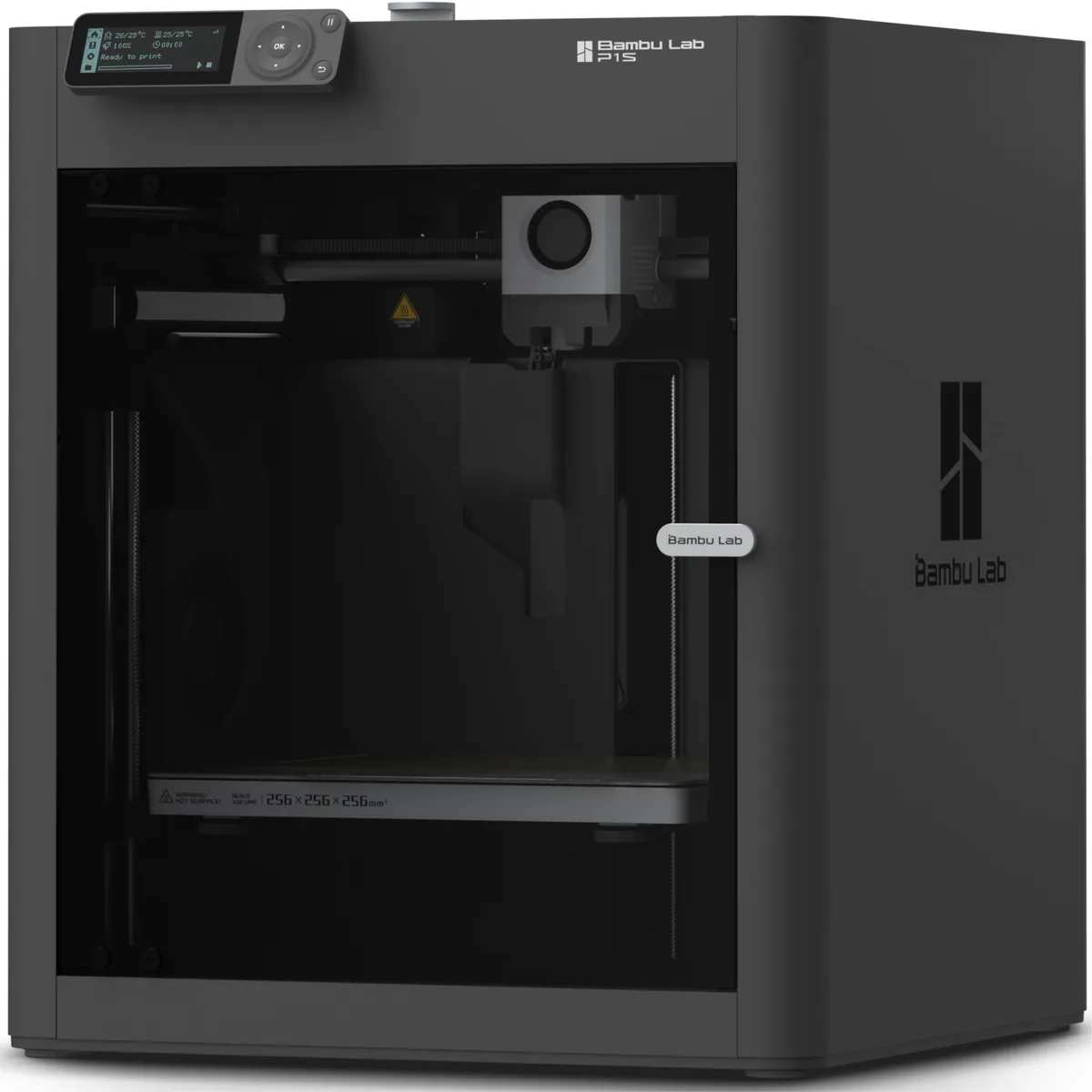
Bambu Lab P1S Enclosed 3D Printer
Pros
- Fully enclosed CoreXY chassis with auxiliary cooling fan
- Seamless multi-color / multi-material integration with Bambu AMS
- Reliable out-of-the-box first layers with dual automated bed leveling
- Active vibration compensation and belt tension monitoring
Cons
- Proprietary closed ecosystem
- Chamber is passively heated by the bed rather than a dedicated PTC heater
- Upgrading to hardened nozzle for carbon fiber requires separate swap
Best Entry-Level Value: Creality Ender 3 V3 SE
The Creality Ender 3 V3 SE represents the best entry-level value because it includes hands-free auto bed leveling and a direct drive extruder for under $200. Creality designed this model to remove the traditional barriers to entry for beginners. Creality lists a 220x220x250mm build volume and a 250mm/s maximum print speed. The Sprite direct drive extruder handles PLA, PETG, and TPU materials reliably. The CR Touch sensor combined with a strain gauge automates the Z-offset calibration, eliminating the need for manual paper tests. Dual Z-axis lead screws provide the stability required to maintain clean layer lines even at higher speeds. The open-frame design limits its ability to print ABS reliably, but for users focused on standard thermoplastics, the Ender 3 V3 SE delivers exceptional print quality for the price.
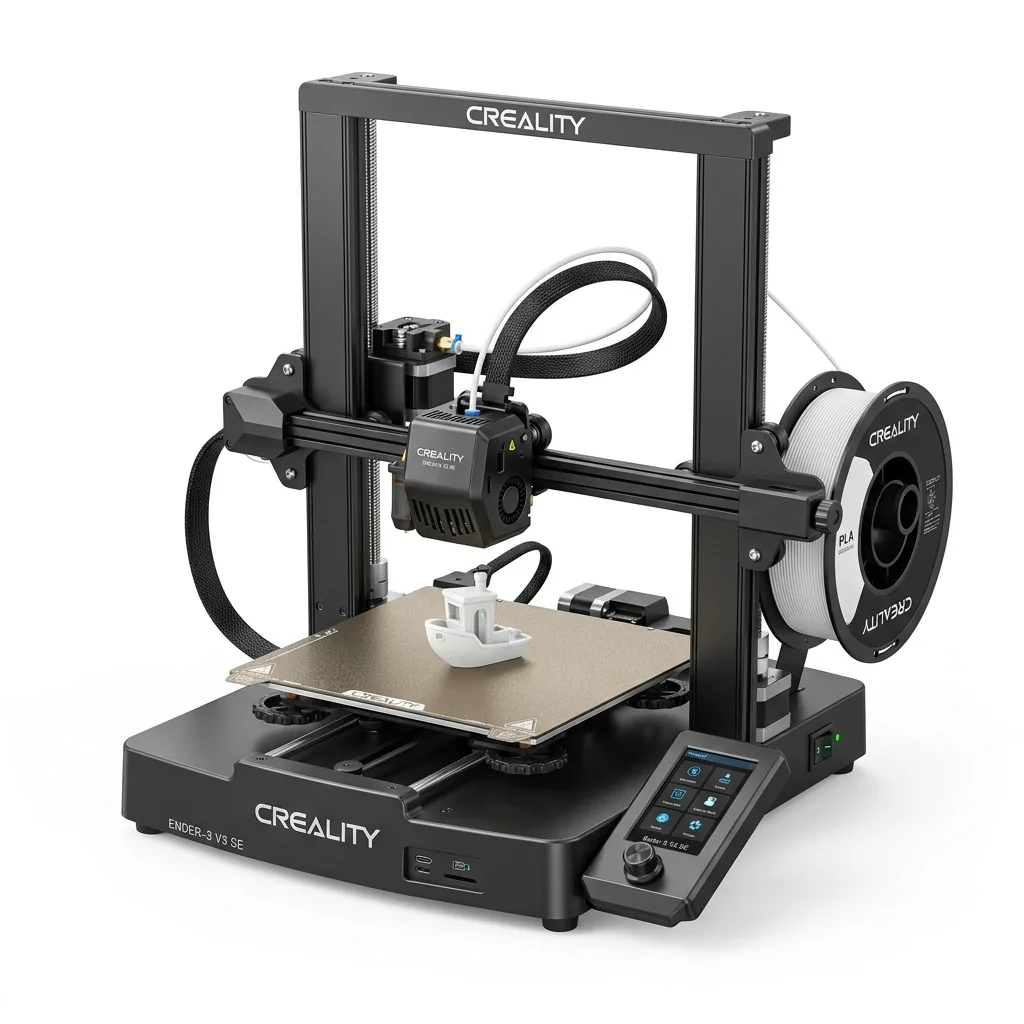
Creality Ender 3 V3 SE 3D Printer
Pros
- Hands-free auto bed leveling and Z-offset calibration
- Reliable Sprite direct drive extruder handles PLA, PETG, and TPU
- Dual Z-axis lead screws ensure high stability
- Incredible sub-$200 value
Cons
- Bowden PTFE inside hotend limits temperature to 250°C
- Open frame not ideal for ABS
Best High-Speed Enclosed Printers for the Money
High-speed enclosed 3D printers offer the best value for engineering materials because they combine rapid CoreXY motion systems with controlled thermal environments. These machines are essential for users who want to print engineering-grade filaments without investing in industrial equipment. You can find detailed breakdowns of these models in our 3D Printer Buying Guides. The models below list maximum speeds of 500mm/s to 600mm/s in their makers’ specifications and use enclosures that keep drafts off the print.
The Creality K1C Carbon Fiber 3D Printer is the pick for carbon fiber composites at high speed. Creality lists a 220x220x250mm build volume and a 600mm/s maximum speed. The machine features an all-metal direct drive with a hardened steel tri-metal Unicorn nozzle, allowing it to handle abrasive PA-CF and PET-CF without excessive wear. An integrated AI camera provides automated failure detection.
The Flashforge Adventurer 5M Pro is the pick for home offices and classrooms. Flashforge specifies a 220x220x220mm build volume and a 600mm/s maximum speed. The dual-channel air filtration system effectively traps styrene fumes, making it suitable for enclosed spaces. The 50 dBA silent printing mode ensures quiet operation.
The QIDI Q1 Pro High-Temp 3D Printer is the pick for active chamber heating. QIDI Tech states a 250x250x250mm build volume and a 600mm/s maximum speed. QIDI lists a dedicated 60°C active PTC chamber heater aimed at reducing warping on high-shrinkage materials like ABS, ASA, and Nylon. The high-temp bimetal nozzle is rated up to 350°C.
The Creality K2 Plus Combo is the large-format pick with active chamber heating. Creality lists a 350x350x350mm build volume and a 600mm/s maximum speed. Creality also lists built-in 60°C active chamber heating and a 350°C hardened hotend, which suit large functional prototypes. The Creality Filament System supports multi-material printing for complex parts.
Best Value Resin 3D Printers
Resin 3D printers offer the best value for high-resolution models because they cure entire layers simultaneously, achieving microscopic details impossible for FDM machines. These printers are the standard for producing tabletop miniatures, jewelry prototypes, and dental models. The value of a resin printer is determined by its LCD resolution, light source uniformity, and print speed.
The Anycubic Photon Mono M7 Pro 14K Resin 3D Printer is the high-resolution pick, and Anycubic lists a 14K mono LCD, which it calls industry-first, with 16.8x24.8 micron XY precision. The dynamic peristaltic resin auto-fill system eliminates the risk of running out of resin mid-print. Anycubic lists a built-in vat heater that keeps resin near 25°C in colder rooms.
The Anycubic Photon Mono 4 Ultra 10K Resin 3D Printer is the value pick at 10K; Anycubic lists a 10K resolution on a 7-inch mono LCD and print speeds up to 120mm/h with ACF release film. The touchscreen interface and automatic level checks make it accessible for users transitioning to resin printing.
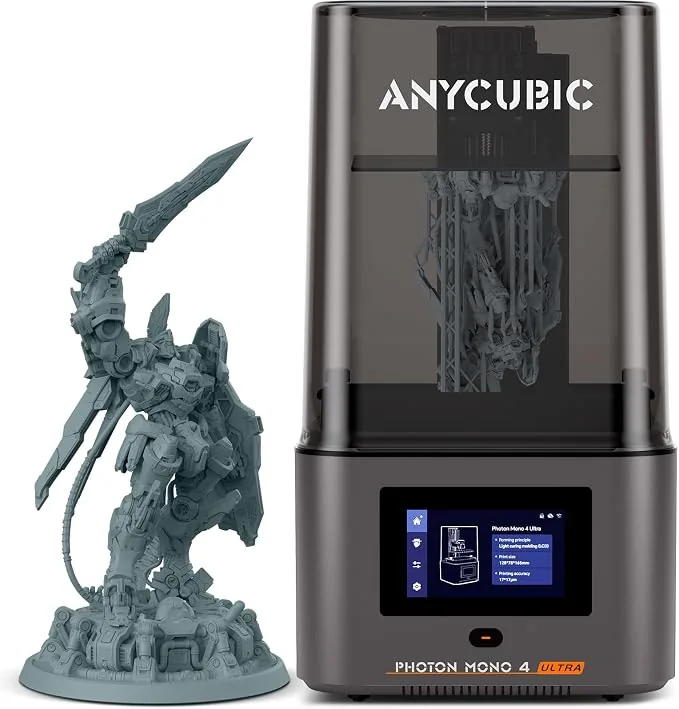
Anycubic Photon Mono 4 Ultra 10K Resin 3D Printer
Pros
- Sharp 10K resolution in a compact desktop format
- High print speed with ACF release film
- User-friendly touchscreen interface with automatic level checks
Cons
- Smaller build envelope compared to 10-inch flagships
The ELEGOO Saturn 4 Ultra 16K is the pick for 16K resolution with tilt release, and ELEGOO specifies a 16K resolution LCD and smart tank heating that holds 30°C. The tilt-release technology speeds up the printing process while reducing the peel force on delicate models.
The ELEGOO Mars 5 Ultra 9K Resin 3D Printer is the compact pick for miniatures; ELEGOO lists a 9K resolution on a 7-inch mono LCD. The tilt-release mechanism is brought down to a compact desktop form factor, producing razor-sharp tabletop miniatures without layer lines.
How to Evaluate 3D Printer Value Beyond the Purchase Price
Evaluating 3D printer value beyond the purchase price requires analyzing the total ownership cost, material capabilities, and workspace requirements. The initial price tag only accounts for the hardware; ongoing expenses include filament, replacement nozzles, build plates, and electricity. Total ownership cost also factors in the time spent troubleshooting failed prints and maintaining the machine. A cheaper open-frame printer may require the separate purchase of an enclosure to print ABS, increasing the total investment. Managing moisture is a critical ongoing cost; investing in the best filament dryer prevents brittle filament and clogged nozzles. Understanding these operational expenses ensures that the chosen printer aligns with long-term budgets.
Project Requirements and Build Volume
Project requirements define the necessary build volume and directly impact the value of a 3D printer. The build volume determines the maximum size of a single continuous printed object. Purchasing a 350x350x350mm printer for small functional brackets wastes desktop space and energy heating a large bed. Conversely, purchasing a 180x180x180mm printer for cosplay helmets requires slicing models into multiple pieces, increasing assembly time and post-processing effort. Buyers maximize value by selecting a build volume that accommodates 90 percent of their intended projects without excess capacity.
Material Compatibility and Active Chamber Heating
Material compatibility depends on the hotend temperature and the presence of active chamber heating. High-temperature engineering filaments like Polycarbonate (PC) and Nylon (PA) need a hotend rated for the temperature their filament maker specifies, and the printers above list nozzle limits from 300°C to 350°C. These materials are highly susceptible to thermal contraction, which causes severe warping and layer splitting in cool environments. Active chamber heaters, listed at 60°C on the QIDI Q1 Pro and K2 Plus, keep the air around the part warm so layers cool more evenly. Purchasing a printer with built-in active heating provides significantly better value than attempting to modify an entry-level machine for high-temperature printing.
Workspace Constraints and Enclosures
Workspace constraints dictate the necessity of fully enclosed chassis and air filtration systems. 3D printers generating ultra-fine particles (UFPs) and volatile organic compounds (VOCs) require proper ventilation. Printing ABS or ASA in a home office or classroom necessitates an enclosure paired with HEPA and activated carbon filtration. A fully enclosed printer traps heat and manages fumes, making it safe for indoor environments. The value of an enclosed printer increases exponentially when dedicated workshop space is unavailable, as it eliminates the need for expensive external exhaust setups.